Article Overview: This article provides an in-depth look at marine lamp guards and lampholders—critical accessories in ship lighting systems. It covers their functions, design considerations, material choices, and manufacturing precision. The goal is to help technical buyers and engineering teams understand how these components contribute to system reliability and safety in demanding marine environments.
What Are Marine Lamp Guards and Their Role in Lighting Systems?
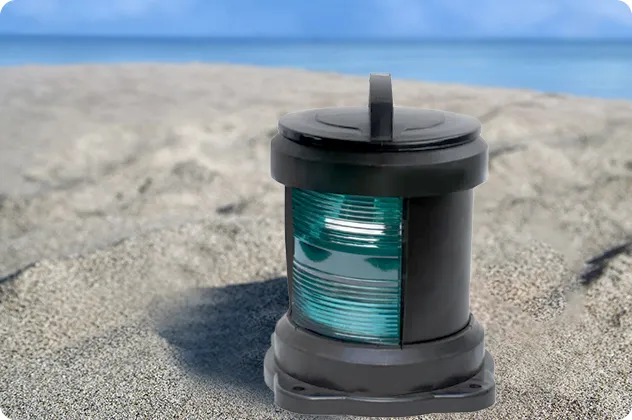
Lamp guards are protective enclosures or cages that surround light sources on vessels. Their primary function is to shield the lamp from physical impact, vibration, and environmental debris. In a marine setting, where decks and engine rooms are subject to constant motion and exposure, lamp guards prevent premature lamp breakage and reduce the risk of electrical hazards. For example, a typical marine lamp guard (such as model 792064) is designed for marine luminaires, offering robust protection while allowing adequate light transmission. Lamp guards also serve secondary roles: they can deflect heat away from nearby surfaces, reduce glare in certain directions, and in some designs, act as a mounting interface for other components such as lenses or diffusers.
From an engineering perspective, the choice of lamp guard affects thermal management and optical performance. Guards made with wide-open geometries minimize light obstruction but may provide less impact resistance. Conversely, denser mesh styles offer better protection but can reduce lumen output by 5–15%. For applications like navigation signal lights, where visibility is critical, guards must comply with standards such as COLREGS, ensuring that light distribution patterns remain within specified parameters. A typical marine lamp guard uses a material and design that balances these factors, as indicated by product descriptions emphasizing protective functionality.

Understanding Lampholders: Types, Compatibility, and Applications
Lampholders—also called lamp sockets or bases—are the electrical and mechanical interface between the lamp and the lighting fixture. In marine lighting, lampholders must accommodate specific lamp bases (e.g., G13 for fluorescent tubes, E27 for incandescent bulbs) and withstand vibration, moisture, and temperature fluctuations. Suppliers offer a range of lampholders, including the fluorescent lampholder series (models 791521, 791522, 791526, 791528, 791533, 791537) and the lampholder FB15. Each model carries a unique MPN, indicating standardized production and specific design characteristics.
The variation in lampholder models reflects differences in mounting type, material, wire entry, and integrated features such as starter holders (e.g., fluorescent lampholder with starter 791537). For fluorescent lighting, lampholders often incorporate a starter socket to initiate lamp ignition. Safety considerations include creepage distances, insulation class, and flame-retardant ratings. In engine rooms or other high-vibration areas, lampholders with secure locking mechanisms or spring-loaded contacts are preferred to prevent intermittent electrical connections. The lamshade product series also standardizes shade attachments, ensuring optical performance is maintained.
When selecting a lampholder, engineers must verify voltage and current ratings, as well as environmental sealing (IP rating). Many marine lampholders are designed to meet IEC 60079 for explosive atmospheres when used in hazardous zones. The FB15 model, for instance, is a common type for linear fluorescent lamps, often used in general accommodation lighting. Compatibility with ballasts and control gear is another key factor—especially with LED retrofit lamps, which may have different electrical characteristics. For further details on compatible electrical connectors, refer to the Marine Electrical Connectors section.
Material Selection and Environmental Resilience
Marine accessories face constant exposure to saltwater, UV radiation, and temperature extremes. Therefore, material choice is critical for longevity and safety. Common materials for lamp guards and lampholders include stainless steel (316L for corrosion resistance), brass with nickel plating, high-grade thermoplastics (polycarbonate, PBT), and aluminum alloys with anodized finishes. A typical lamp guard is often fabricated from a corrosion-resistant metal or coated steel, as inferred from its marine application.
For lampholders, non-metallic materials like polyamide (nylon) or phenolic resin are used for their insulating properties and resistance to tracking. However, in high-temperature areas near engines, ceramic lampholders may be specified. The same sealing technologies used in marine electrical connectors are relevant to understanding system-level reliability. Engineers should also consider gaskets and sealing compounds: silicone gaskets offer good UV and ozone resistance, while EPDM is better for steam cleaning environments.
Manufacturing processes such as injection molding, die-casting, and stamping are employed to achieve dimensional consistency. For lampholders, contact terminals are often made of beryllium copper or phosphor bronze for spring properties and conductivity, then plated with tin or gold to resist corrosion. The evidence of multiple MPNs (like 791521, 791522…) for similar products suggests that suppliers offer variants to suit different performance requirements or customer specifications—an important consideration for procurement teams managing multi-vessel fleets.
Manufacturing Precision and Quality Assurance
Reliability in marine accessories depends on consistent manufacturing quality. Dimensional tolerances must be tight to ensure proper lamp seating and electrical contact. For lampholders, the distance between contact pins and the alignment of lamp retention clips directly affect lamp life and safety. Product pages for the fluorescent lampholder series show standardized MPN codes, implying controlled production runs and batch traceability.
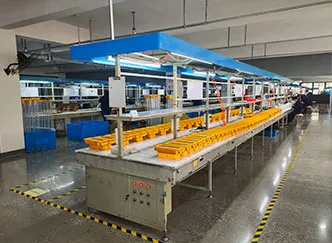
Quality assurance measures likely include: 100% electrical testing for continuity and insulation resistance; mechanical testing for insertion/withdrawal forces (especially for push-fit lampholders); and environmental testing for salt spray and humidity. For lamp guards, weld integrity and coating thickness are verified. In factory imagery, the presence of organized workstations and machinery suggests a systematic approach to fabrication. Production capabilities such as ODM (Original Design Manufacturing) and custom tooling are often available. For more details on manufacturing capabilities, visit the Factory page.
For technical buyers, requesting certificates of conformance, type test reports, and sample inspection records can mitigate risk. Many marine components are governed by classification society rules (DNV, ABS, Lloyd's). While not all accessories require full type approval, using parts from a supplier with a mature quality management system (e.g., ISO 9001) is advisable. The Company Profile may provide additional insight into capabilities.
Selecting the Right Accessories for Your Fleet
When specifying lamp guards and lampholders for a new build or retrofit, consider the following steps:
- Identify the lamp type: Determine the base (G13, E27, G5, etc.) and wattage. Match lampholder ratings accordingly.
- Evaluate environmental zone: For engine rooms, cargo holds, or open decks, choose materials and sealing that withstand expected temperatures and corrosives.
- Check physical compatibility: Ensure lamp guard footprint fits the luminaire housing and that lampholder mounting hole pattern matches the fixture.
- Review standards compliance: For navigation lights, the guard must not alter light distribution beyond allowed limits. For hazardous areas, select appropriately certified components.
- Consider maintenance: Quick-release lampholders and tool-less guard removal can reduce downtime during lamp replacement.
A hypothetical example: A vessel operator rewiring accommodation lighting with LED tubes. They need to retrofit existing fluorescent fixtures. The lampholders must be compatible with the G13 base of the LED tubes, but also must not contain a starter (since LED tubes often bypass the starter). The fluorescent lampholder without starter variant (e.g., model 791521) would be appropriate, while the variant with starter would not. This illustrates the importance of understanding the specific model features. For a broader selection of marine lighting products, see the Marine Fluorescent Light section.
Frequently Asked Questions
What is the difference between a lamp guard and a lampholder?
A lamp guard physically protects the lamp from damage, while a lampholder provides electrical connection and mechanical support. They are separate components, though some luminaires integrate both.
Can I use a standard industrial lampholder on a ship?
It is not recommended. Marine lampholders are designed with enhanced corrosion resistance, vibration damping, and often higher temperature ratings. Using non-marine parts can lead to premature failure and safety risks.
What certification should I look for in marine lighting accessories?
Common certifications include CE, RoHS, and type approvals from classification societies (DNV, ABS, BV, CCS). For explosion-proof applications, ATEX or IECEx certification is required.
How do I match a lampholder to an LED retrofit lamp?
Ensure that the base type (e.g., G13) matches. Also, verify that the lampholder does not contain a starter if the LED lamp has an internal driver. Check the lamp's recommended ballast compatibility.
Where can I find additional marine lighting products?
For navigation signal lights, visit the Navigation Signal Light section. For other accessories, see the Accessories page.
Conclusion
Marine lamp guards and lampholders may appear as simple components, but their design, material, and manufacturing quality have a direct impact on lighting system reliability and vessel safety. This article has examined their roles, technical specifications, and selection criteria. For engineering managers and technical buyers, investing in well-engineered accessories reduces lifecycle costs and operational risk. The standardized product range available in the market, evidenced by MPN-coded lampholders and typical lamp guards, provides a baseline for evaluating options. Making informed decisions about accessories ensures that your ship's lighting performs as intended, voyage after voyage.