Article Overview: Selecting explosion-proof lighting for marine environments involves more than checking an IP rating. This article provides a technical comparison of key performance criteria—including ingress protection, corrosion resistance, vibration tolerance, and certification requirements—to help procurement teams and technical evaluators make informed, risk-aware decisions. We examine common assumptions about IP67 and highlight trade-offs that are often overlooked.
Understanding IP67 and Its Limitations in Marine Environments
The IP (Ingress Protection) rating system defines the level of sealing effectiveness against solids and liquids. IP67 indicates total protection against dust ingress (6) and protection against temporary immersion in water up to 1 meter depth for 30 minutes (7). For many industrial applications, IP67 is considered robust. However, marine environments introduce conditions that challenge this rating in practice.
On a vessel, lighting fixtures are exposed not just to water splashes but also to high-pressure washdowns, salt-laden spray, and continuous humidity. The “temporary immersion” test for IP7 does not account for repeated thermal cycling, which can degrade seals over time. A fixture that passes IP67 certification in a lab may fail after months of service in a marine engine room or on an open deck. Therefore, relying solely on IP67 as a selection criterion can lead to premature failures and safety risks.
Furthermore, the IP rating does not measure resistance to corrosion, vibration, or the chemical attack of salt. These factors are often more critical for longevity in maritime settings. For example, the ZHIYUE RFBL108 LED explosion proof light is rated IP67 and uses an aluminum housing. While aluminum offers good corrosion resistance when properly treated, the seal integrity and the quality of gaskets are equally important. Buyers should request detailed test data on seal longevity and salt-spray resistance before specifying a fixture.
Beyond IP: Corrosion Resistance, Vibration, and Salt Spray
Marine environments accelerate metal degradation through electrochemical corrosion and galvanic action. Salt spray tests (e.g., ASTM B117) provide a more realistic measure of a fixture's durability than IP alone. Lights intended for deck or near-deck use should demonstrate at least 500 hours of salt spray resistance without pitting or coating failure.
Vibration is another critical factor. Shipboard machinery, wave action, and docking impacts subject lighting fixtures to constant low-frequency vibration. Explosion-proof lights must maintain their seal and structural integrity under these conditions. Look for fixtures that have passed vibration tests such as IEC 60068-2-6. The combination of vibration and moisture can cause micro-cracks in seals, leading to internal corrosion and eventual failure.
When comparing products, evaluate the entire assembly: not just the housing material but also the gasket material (silicone vs. neoprene), the type of fasteners (stainless steel or coated), and the method of cable entry. A fixture may have an IP67 rating but use a non-corrosion-resistant cable gland that becomes a failure point within months. For comprehensive protection, consider the complete system, including marine electrical connectors that are specifically designed for saltwater resistance.
Comparing Materials and Construction: Aluminum vs. Alternatives
The RFBL108 uses an aluminum alloy housing, which is common for marine explosion-proof lights due to its relatively light weight and good thermal conductivity. Aluminum, however, is prone to galvanic corrosion when in contact with dissimilar metals in a wet environment. Anodizing or powder coating can mitigate this, but coating damage during installation or maintenance exposes the base metal.
Stainless steel (316L) offers superior corrosion resistance but is heavier and more expensive. Copper-free aluminum alloys (e.g., LM6) are sometimes used for better castability and corrosion performance. Fiber-reinforced plastics are emerging in some applications, but they may not meet all explosion-proof certifications due to static discharge risks.
The decision matrix should consider the specific location of the fixture. For interior zones with controlled humidity, aluminum may suffice. For exposed decks or near the waterline, stainless steel or heavily coated aluminum is advisable. The trade-off is cost versus lifecycle maintenance. In our example, the RFBL108's aluminum construction is suitable for many below-deck and protected areas, but for high-corrosion zones, buyers should verify coating certification and consider alternative material options.
Certification and Compliance: Which Standards Matter?
Explosion-proof lights for marine use must comply with multiple standards. IEC 60079 series covers explosion protection for gas atmospheres, while IEC 60092 focuses on electrical installations on ships. Additionally, classification societies (Lloyd's, DNV, ABS) may require type approval for specific vessel types.
IP67 is often a baseline requirement, but it is not a substitute for explosion-proof certifications such as Ex d (flameproof) or Ex e (increased safety). A fixture may be IP67 but lack the proper explosion-proof rating for Zone 1 or Zone 2 hazardous areas on a ship. Always verify the Ex marking and the gas group (IIA, IIB, IIC) and temperature class (T1–T6).
The RFBL108, as an LED explosion proof light, likely carries appropriate certifications if it meets marine requirements. However, buyers should request copies of certificates and verify that testing includes both ingress protection and explosion protection simultaneously. Some fixtures are tested separately for IP and Ex, meaning the seals may not be validated under hazardous gas conditions. A comprehensive certification report is non-negotiable for marine applications where safety is paramount.
Decision Framework: Matching Lighting to Operational Context
To avoid costly mistakes, use a multi-criteria evaluation that weights the following factors relative to your specific use case:
- Environmental exposure: Deck vs. engine room vs. cargo hold. Salt spray and washdown frequency dictate needed corrosion resistance.
- Vibration levels: Near main engines or pumps? Require vibration-tested fixtures.
- Explosion hazard zone: Zone 1 or Zone 2? Ensure correct Ex rating.
- Maintenance access: Difficult-to-reach locations may favor longer-life materials despite higher upfront cost.
- Total cost of ownership: Include replacement intervals, spare parts availability, and labor for mounting. Aluminum fixtures may be cheaper initially but could require more frequent replacement in harsh zones.
Create a comparison table for shortlisted products, listing IP rating, corrosion resistance test data, vibration test data, Ex certification details, material, and warranty. Insist on evidence, not datasheet claims. For example, if a supplier claims IP67, ask for test reports showing results after salt spray cycling, not just dust and water immersion. The RFBL108 achieves IP67 but its suitability depends on the above factors, not the rating alone.
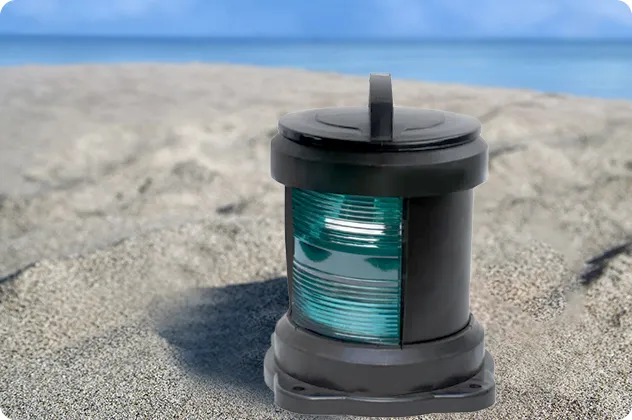
Additionally, consider that lighting is part of a larger system. Compatibility with navigation signal lights and other onboard electrical gear can simplify procurement and spares management.
Finally, involve the vessel's classification surveyor early in the selection process. They can confirm whether a given fixture's certification meets the specific rules of the vessel's flag state and class society. This prevents last-minute compliance issues.
Frequently Asked Questions
Is IP67 sufficient for all marine explosion-proof light applications?
Not necessarily. IP67 is a baseline for water ingress protection, but it does not address corrosion, vibration, or long-term seal degradation. In high-corrosion or high-vibration zones, additional features such as salt spray resistance and vibration testing are essential.
What is the difference between IP67 and IP68?
IP68 offers protection against continuous immersion beyond 1 meter, typically specified by the manufacturer. However, IP68 does not inherently improve corrosion or vibration resistance. For marine use, the combination of IP67 and robust material selection often provides a more practical balance than chasing higher IP numbers alone.
Can aluminum explosion-proof lights be used on exposed decks?
Aluminum lights can be used if they have appropriate protective coatings and are in less aggressive zones. However, for severe salt spray exposure, stainless steel or heavily coated alternatives are recommended. The RFBL108's aluminum housing is more suited for interior or semi-protected areas.
What certifications should I look for in a marine explosion-proof light?
Look for IECEx or ATEX certification for explosion protection, plus marine type approval from a recognized classification society (e.g., DNV, Lloyd's, ABS). Also verify compliance with IEC 60092 for shipboard electrical installations. The IP rating is supplementary.
How often should explosion-proof lights be inspected?
Annual inspection is typical for high-risk locations, but more frequent checks may be needed after major weather events or if the fixture is exposed to washdowns. Focus on seal integrity, corrosion spots, and cable gland condition. Replace any fixture that shows compromised sealing or corrosion.
Conclusion
Selecting marine explosion-proof lights requires moving beyond a single specification like IP67. While IP67 is a useful baseline, the real-world performance of a lighting fixture in a marine environment is determined by its corrosion resistance, vibration tolerance, material quality, and certification depth. By evaluating these factors together and using a decision framework that aligns with operational context, procurement teams and technical evaluators can reduce risk, lower total cost of ownership, and enhance safety. Always request documented evidence and consult with classification authorities early in the process. For more detailed product specifications, refer to the explosion proof lighting solutions available from specialized manufacturers and compare them against your specific operational profile.