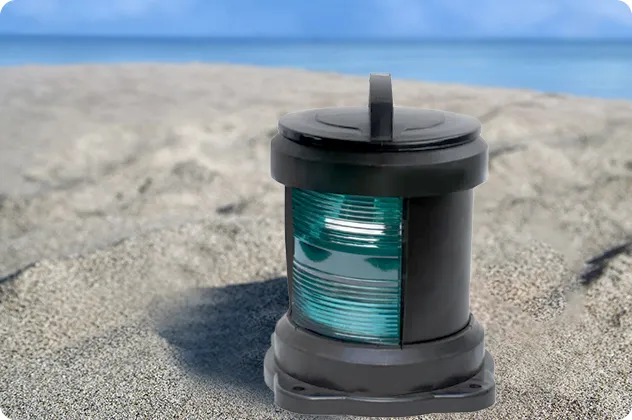
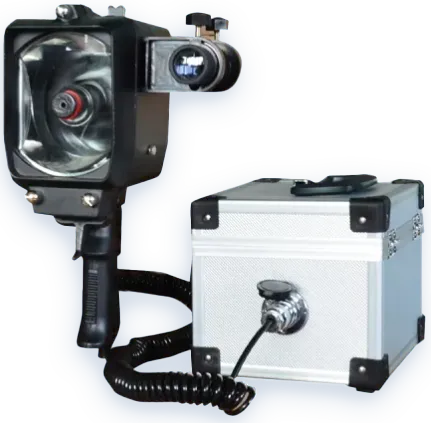
Article Overview: This article provides a comprehensive breakdown of the key components that make up a marine lighting system, from lampshades and lamp holders to guards, bases, connectors, and bulbs. Designed for technical buyers and engineers, it explains the role of each part, how they integrate, and what to consider when specifying a reliable solution for vessels or offshore installations—without bias toward any single manufacturer.
Marine lighting is more than a single fixture. A reliable, code-compliant system depends on a coordinated set of components, each engineered to withstand saltwater, vibration, humidity, and confined spaces. For procurement teams and engineering managers evaluating suppliers, understanding the full parts spectrum—from the lampshade that distributes light to the lamp holder that secures the bulb—is essential. This article surveys the main components and explains how they integrate into a complete marine lighting system.
What Are the Core Components of a Marine Lighting System?
A complete marine lighting system includes not only the luminaire but also mechanical supports, electrical interfaces, and protective devices. Below are the primary parts found in typical installations:
- Lampshade (reflector/diffuser) – Shapes and directs light output, reduces glare, and protects the bulb from spray and impact.
- Lamp holder (lampholder) – Provides mechanical support and electrical contact for the bulb. Available in versions for fluorescent, incandescent, and LED lamps.
- Lamp guard – A metal or polymer cage that shields the bulb and lamp holder from physical damage in high-traffic or heavy-lift areas.
- Lamp base / mounting bracket – Attaches the fixture to deck, bulkhead, or overhead structures.
- Electrical connectors and cable glands – Ensure watertight, vibration-resistant connections between the fixture and shipboard power.
- Bulbs (light sources) – Fluorescent, incandescent, or LED, chosen for efficacy, color temperature, and emergency lighting requirements.
- Ballasts and drivers – Required for fluorescent and some LED lamps to regulate current.
Each component must be rated for its intended environment—marine-grade materials such as stainless steel, bronze, or corrosion-resistant plastics are standard. For example, a typical lampshade for marine use is formed from high-impact polycarbonate or tempered glass to resist breakage. When selecting a lampshade, consider whether you need a diffuser for general illumination or a reflector for directed light; options can be explored through a dedicated product center that covers all major component categories.
Why Do Lamp Holders and Lamp Guards Need Special Attention?
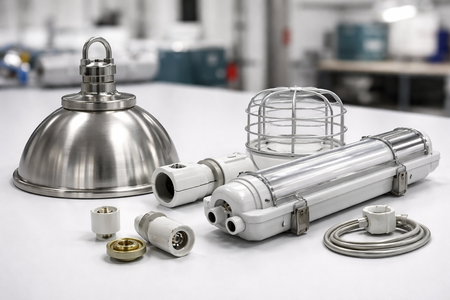
Lamp holders (lampholders) are a frequent point of failure in marine lighting. They must endure constant vibration, temperature cycles, and exposure to salt-laden air. A fluorescent lampholder, for instance, must keep the lamp securely in place while maintaining electrical continuity. Modern marine-grade lampholders are designed with corrosion-resistant contacts and robust insulation. Some holders integrate a starter for fluorescent lamps, reducing component count. When specifying, ensure the lampholder matches the lamp base type (e.g., G5 or G13 for fluorescents, E26 or E27 for incandescent).
Lamp guards serve a different but equally critical role. In engine rooms, cargo holds, and passageways, lamps are vulnerable to accidental impact from tools, cargo, or crew. A typical marine lamp guard is a metal cage that protects the lamp holder and bulb without blocking too much light output. When selecting guards, consider material (stainless steel or galvanized steel), mesh size, and whether the guard can be removed for maintenance. For installations where space is tight, such as inside control cabinets or behind panels, compact fixtures with integrated lamp holders and guards are available. For a broad selection of lampholders and guards, consult a marine fluorescent light range or marine incandescent light offerings, which often include matched holders and guards.
How Do Lampshades, Bases, and Brackets Fit Together?
A marine lighting assembly typically starts with a base or bracket that is permanently mounted to the structure. The lampshade (or diffuser) attaches to this base, enclosing the lamp holder and bulb. In many designs, the lampshade itself incorporates the reflector and may also serve as the housing for the lamp holder. The choice of materials for the shade is important: polycarbonate offers impact resistance and UV stability, while glass provides better light transmission but is heavier and more fragile. For hazardous zones, explosion-proof fixtures may be required, where the lampshade and base form a sealed enclosure that contains any internal ignition. In such cases, you would typically turn to a specialist explosion-proof light range.
Brackets and mounting arms must be robust enough to handle the fixture's weight plus dynamic loads from vessel motion. Adjustable brackets allow aiming of floodlights and searchlights. When specifying a complete solution, ensure that the bracket's bolt pattern and material are compatible with the lampshade and the mounting surface (steel, aluminum, or composite). For floodlights and searchlights, see the flood light search light category which includes various mounting options.
What Role Do Electrical Connectors and Bulbs Play in System Integrity?
Reliable electrical connections are non-negotiable at sea. Marine electrical connectors must be waterproof (often IP67 or higher) and resistant to corrosion. Cable glands with appropriate ingress protection seals prevent moisture from entering the fixture. Even the best lamp holder and lampshade won't perform if the wiring degrades. A full selection of marine electrical connectors ensures system integrity.
Bulbs themselves are consumable items, but their selection affects system performance. Fluorescent lamps remain common for general lighting due to their efficiency and broad color rendering. Incandescent lamps are still used in niche applications where instant-on and simple dimming are needed. LEDs are increasingly specified for their long life and low power draw. However, LED retrofits may require different lamp holders and drivers, so always confirm compatibility. For navigation and signaling, specialized bulbs are available in the bulbs and lamp category.
How Should You Specify a Complete Marine Lighting Solution?
When assembling a total system, follow these steps:
- Define the environment – Is the area hazardous (gas/dust zones)? What is the ambient temperature range? Will the fixture be exposed to direct sea spray or pressure washing?
- Select the light source – Fluorescent, incandescent, or LED. Consider color temperature, emergency lighting requirements, and dimming capability.
- Choose the lamp holder – Match it to the lamp base type and wattage. For fluorescent, decide whether a separate starter or integrated starter holder is preferred.
- Add the lampshade and guard – The shade governs photometric performance; the guard provides mechanical protection. Ensure both fit together mechanically.
- Select mounting hardware – Brackets, bases, and arms must match the fixture and be rated for the expected loads.
- Specify electrical connectors – Cable types, gland sizes, and junction boxes should all be rated for marine use.
- Verify certifications – If the installation falls under regulatory oversight (SOLAS, DNV, ABS, etc.), confirm that the entire assembly meets the required standards.
Many suppliers offer pre-assembled kits that combine these components. For example, a typical navigation light package includes a lampshade, lamp holder, guard, base, and pre-wired cable. However, when replacing or upgrading existing lights, ordering individual replacement parts can be more economical. The accessories page covers many such components. For specialized applications like emergency lighting, see the lifebuoy light category.
FAQ
What is the difference between a lamp holder and a lamp base?
A lamp holder (lampholder) is the socket that holds and electrically connects the bulb. A lamp base is the mechanical foundation that attaches the entire fixture to the vessel structure. They are separate components that must be compatible.
Can I use a standard industrial lampshade on a ship?
Not recommended. Marine lampshades are built from corrosion-resistant materials and often have additional gaskets to prevent water ingress. Standard industrial shades may fail prematurely in saltwater environments.
How often should lamp guards be replaced?
Lamp guards should be inspected regularly for corrosion or damage. Replacement is needed if the guard is bent, rusted, or missing protective coatings. In high-vibration areas, check mounting fasteners frequently.
Do I need a separate starter for a fluorescent lamp holder?
It depends on the holder design. Some fluorescent lampholders come with an integrated starter, while others require an external starter. Always check the product specification.
Are LED retrofits compatible with existing fluorescent lamp holders?
Not always. LED tubes often require a different lamp holder and modified ballast/driver. Consult the manufacturer's compatibility matrix before retrofitting.
Conclusion
A complete marine lighting solution is a system of interdependent components—from the lampshade that shapes the beam to the lamp holder that makes the electrical connection, and the guard that protects it all. Understanding each part’s function helps technical buyers and engineers make informed specification decisions. When sourcing these components, look for proven marine-grade materials, corrosion resistance, and compliance with relevant class society rules. For a broad selection of pre-engineered components and advice on building a coherent system, explore the product center, which covers lampshades, lamp holders, guards, and all supporting accessories. Additionally, the applications page provides guidance on matching components to specific vessel environments.