Article Overview: This article provides procurement managers, sourcing teams, and project engineers with a structured framework for evaluating suppliers of the MARINE WATERTIGHT JUNCTION BOX J-1M. It covers key verification steps before RFQ, tradeoffs between cost, throughput, and quality, common pitfalls, and a step-by-step RFQ process. The goal is to reduce procurement mistakes and support informed decision-making for this critical marine electrical component.
What Should You Verify Before RFQ for a Marine Watertight Junction Box?
Before issuing an RFQ for the MARINE WATERTIGHT JUNCTION BOX J-1M, buyers should verify several technical and compliance aspects. These checks reduce the risk of receiving non-conforming products that can delay projects or cause safety issues.
- Ingress Protection (IP) Rating: Confirm that the junction box meets at least IP56 or higher, as required for marine deck environments. The J-1M model typically offers watertight sealing.
- Material Certification: Verify that the enclosure material (e.g., marine-grade aluminum or stainless steel) is corrosion-resistant and compatible with the intended environment.
- Cable Entry Specifications: Ensure the number and size of cable glands match your installation drawing. The J-1M usually supports multiple cable entries.
- Certifications and Standards: Check if the supplier can provide certificates such as CCS, DNV, or type approval relevant to your region.
Avoid basing RFQ solely on unit price; consider total cost of ownership including potential non-compliance costs.
Key Supplier Evaluation Criteria for the J-1M Junction Box
Evaluating suppliers for the MARINE WATERTIGHT JUNCTION BOX J-1M requires looking beyond price. Use the following criteria to shortlist vendors.
- Manufacturing Experience: Prefer suppliers with at least 5 years in marine electrical equipment production.
- Quality Management System: ISO 9001 certification is a baseline; look for marine-specific quality controls.
- Lead Time and Capacity: Assess whether the supplier can meet your throughput requirements without compromising quality. Request production schedules.
- After-Sales Support: Check availability of spare parts and technical support for the junction box series.
- Reference Projects: Ask for case studies where the J-1M or similar models were used in vessel or offshore installations.
Phase 1: Supplier Shortlisting and Document Review
Collect technical datasheets, certificates, and sample inspection reports. Validate that the MARINE WATERTIGHT JUNCTION BOX J-1M meets your project's IP and material requirements. Shortlist 3-5 suppliers for the RFQ stage based on this review.
How to Assess Cost, Throughput, and Quality Tradeoffs?
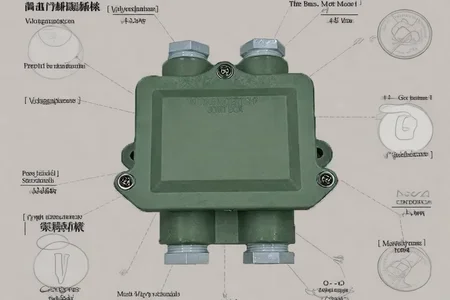
Procurement decisions for the MARINE WATERTIGHT JUNCTION BOX J-1M often involve balancing three conflicting goals. Here is a practical framework.
Tradeoff Analysis for J-1M Procurement
Option A: Lowest Unit Cost – Suitable for non-critical applications with high volume. Risk: may compromise material thickness or seal quality.
Option B: Highest Quality (Premium materials, extra testing) – Ideal for harsh environments or safety-critical systems. Risk: longer lead time and higher upfront cost.
Buyer Note: For most marine projects, a balanced approach with moderate quality and throughput is optimal. Use the flow block below to structure RFQ responses.
Step 2: Structuring RFQ to Compare Tradeoffs
In your RFQ, ask each supplier to quote for three scenarios: (1) minimum cost, (2) fastest delivery, (3) highest quality. Then compare the total cost of ownership across scenarios. This reveals how each supplier handles the cost-throughput-quality triangle for the MARINE WATERTIGHT JUNCTION BOX J-1M.
Common Procurement Mistakes and How to Avoid Them
Even experienced buyers can overlook critical details when sourcing junction boxes. Below are frequent errors and mitigation strategies.
- Mistake: Ignoring marine-specific certifications. A general-purpose watertight box may not satisfy class society rules. Always verify that the MARINE WATERTIGHT JUNCTION BOX J-1M has relevant approvals for your project.
- Mistake: Underestimating lead time impact on throughput. Confirm the supplier's production capacity for large orders. Consider using a Home solution like strategic buffer stock.
- Mistake: Choosing based on lowest price without testing. Request a pre-production sample of the junction box to test seal integrity and corrosion resistance before committing to volume.
Step-by-Step RFQ Process for the MARINE WATERTIGHT JUNCTION BOX J-1M
Use this structured RFQ approach to gather comparable offers from suppliers.
Step 3: RFQ Drafting and Distribution
Include clear specifications: model J-1M, IP rating, material type, cable entry configuration, required certifications, and delivery schedule. Request pricing per unit and for volumes 50, 100, 500. Ask about lead time for each volume and confirm whether the price includes packing and documentation.
Step 4: Bid Evaluation and Supplier Negotiation
After receiving quotes, evaluate based on total cost (including freight, duties, potential rework). Conduct a technical compliance check against the J-1M specification. Shortlist two suppliers for negotiation. Use the tradeoff analysis to discuss cost adjustments or lead time reductions without compromising quality.
FAQ
What certifications should the MARINE WATERTIGHT JUNCTION BOX J-1M have?
Typical certifications include IP56 or higher, and optionally CCS, DNV, or type approval from a recognized classification society. Always confirm with the supplier which certifications they provide.
What is the typical lead time for the J-1M junction box?
Lead time varies by supplier and order volume. For small quantities, it can be 2-4 weeks; for larger orders (>500 units), expect 6-10 weeks. Request a confirmed schedule in the RFQ.
Can the J-1M be customized for different cable entry configurations?
Many suppliers offer customization, but it may affect lead time and cost. Discuss your specific cable entry requirements early with the manufacturer.
How do I ensure consistent quality across batches?
Include in your contract a requirement for batch sampling and testing. Also, consider visiting the supplier’s factory or requesting third-party inspection before shipment. For more guidance, explore the marine electrical products range at Home for marine electrical solutions.
Conclusion
Procuring the MARINE WATERTIGHT JUNCTION BOX J-1M requires a balanced approach that accounts for cost, throughput, and quality. By following the verification steps outlined above, using structured RFQ processes, and avoiding common mistakes, procurement teams can select a supplier that meets project requirements without unexpected setbacks. Always validate certifications, request samples, and negotiate based on total lifecycle cost. For additional resources on marine electrical components, consult the product page at marine electrical connectors and accessories.