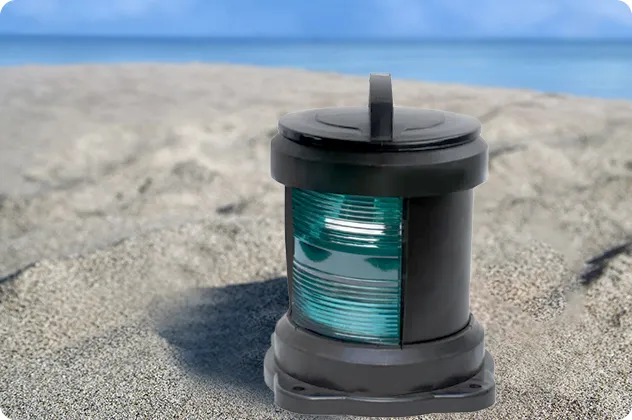
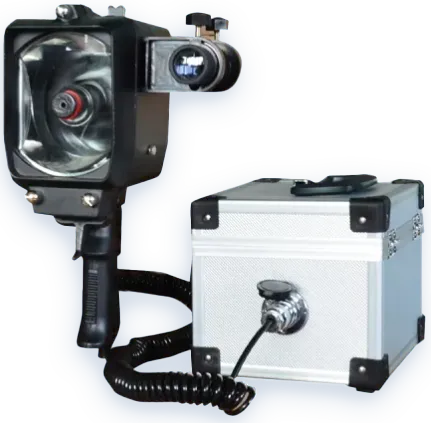
Article Overview: Procurement guide for marine electrical connectors. Learn what to check in supplier RFQs, material standards, and certification requirements to avoid costly marine installation failures.
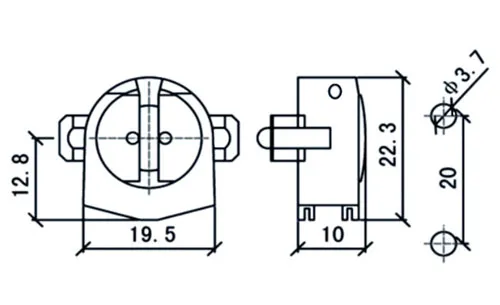
Article Overview: This guide is written for procurement managers, sourcing teams, and project engineers who are about to evaluate suppliers of marine electrical connectors. It provides a practical, checklist-based framework to reduce common purchasing mistakes, covering material standards, environmental resistance, certification verification, and RFQ preparation. The goal is to help you qualify suppliers with confidence and avoid costly in-service failures.
What Are Marine Electrical Connectors and Why Do They Matter for Procurement?
Marine electrical connectors are specialized components designed to maintain reliable electrical connections in harsh marine environments. Unlike standard industrial connectors, they must withstand continuous exposure to saltwater spray, humidity, vibration, and temperature extremes. For procurement professionals, understanding the technical nuances of these connectors is the first step toward selecting a supplier that can deliver long-term performance.
Connectors in marine applications serve a wide range of systems: navigation lighting, communication equipment, engine controls, deck machinery, and safety systems. A failure in a single connector can lead to system downtime, safety hazards, and expensive retrofits. Therefore, the procurement process should not be treated as a simple commodity buy. Instead, it requires a structured evaluation of the product design, material selection, and the supplier’s quality assurance processes.
What Should You Verify Before Issuing an RFQ?
Before sending out a request for quotation (RFQ), you need to align your internal technical requirements and ensure that the supplier can meet them. Here is a checklist of essential verification points:
- Service environment: Define the specific conditions (salt spray, temperature range, UV exposure, mechanical shock) that the connector must endure.
- Electrical ratings: Confirm voltage, current, and frequency requirements, especially for power or signal circuits.
- Ingress protection (IP) rating: Specify the minimum IP rating (e.g., IP66, IP67, or IP68) based on submersion or spray exposure.
- Certification needs: Identify mandatory classifications (e.g., Lloyd's Register, DNV, ABS, or other flag-state requirements) for the vessel or installation.
- Interchangeability and life cycle: Clarify if connectors need to be backward-compatible with existing installations and the expected number of mating cycles.
Including these specifications in your RFQ will help suppliers provide accurate pricing and avoid post-award surprises. It also enables you to compare bids on an apples-to-apples basis. As part of your evaluation, consider requesting samples for in-house testing before placing volume orders.
Material and Environmental Standards for Marine Connectors
Material selection is often the most critical factor in marine connector longevity. Common housing materials include marine-grade brass, stainless steel, and engineered polymers that resist corrosion and UV degradation. For electrical contacts, tin-plated or gold-plated copper alloys are typical, with the plating thickness directly affecting resistance to corrosion and wear.
Standards such as IEC 60068 (environmental testing) and ISO 9227 (salt spray testing) provide benchmarks for evaluating connector durability. When reviewing a supplier’s data sheets, look for documented test results that demonstrate compliance with these standards. A supplier that cannot provide third-party test reports for corrosion, thermal cycling, or mechanical endurance should raise a red flag.
In many marine installations, connectors must also comply with fire safety standards such as IEC 60332 (flame propagation) or equivalent. Be sure to confirm the applicable safety class for your application, especially in enclosed engine rooms or accommodation areas.
Supplier Qualification Checklist: What to Ask Beyond the Price
Price is rarely the best indicator of total cost of ownership for marine electrical connectors. A low-cost connector may fail prematurely, causing replacement labor, vessel downtime, and safety risks. Use this checklist when qualifying new suppliers:
- Manufacturing experience: How many years has the supplier produced connectors for marine or similar harsh environments?
- Quality management system: Does the supplier hold ISO 9001 or IATF 16949 certification? Are internal inspection records shared?
- Testing capability: Can the supplier perform in-house salt spray, vibration, and insulation resistance testing? Do they provide test certificates with shipments?
- Traceability: Are connectors marked with batch numbers or date codes? Can the supplier trace materials back to original mill certificates?
- Customization services: If your design requires custom cable assembly or special plating, what is the supplier’s lead time for samples and production?
- Logistics and lead time: What are the typical shipping times to your port or warehouse? Are they able to hold consignment stock for urgent spares?
Visiting the supplier’s factory, or conducting a virtual audit, is highly recommended for first-time purchases. For existing suppliers, periodic audits help ensure that quality levels remain consistent. Remember that marine electrical connectors are a critical link in your vessel's electrical infrastructure, and a transparent supply chain is your best protection against field failures.
How to Compare Connector Designs for Specific Marine Scenarios
Not all marine electrical connectors are interchangeable. Different applications demand different design features. For example, connectors used in explosion-hazard zones (e.g., fuel handling areas) must meet ATEX or IECEx requirements, often with intrinsically safe designs. Connectors on exposed decks may require watertight sealing with locking mechanisms to prevent accidental disconnection. Connectors inside climate-controlled cabins may have less stringent environmental requirements but could prioritize ease of installation and space constraints.
When comparing designs from multiple suppliers, create a side-by-side matrix that includes:
- Housing material and coating
- Contact plating and current rating
- IP rating and temperature range
- Certification marks and applicable standards
- Mating cycles and insertion force
- Warranty terms and field service support
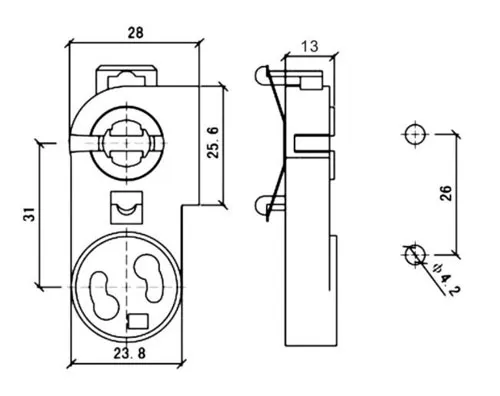
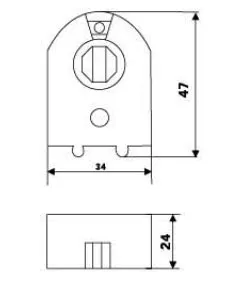
This matrix will highlight where suppliers differentiate themselves beyond price. In some cases, a slightly more expensive connector with superior corrosion resistance can reduce total ownership costs by eliminating premature replacements. For auxiliary systems such as marine fluorescent light fixtures, connector compatibility with existing lamp holders (like those in the technical drawings shown) should also be verified.
FAQ
What certifications should I look for in marine electrical connectors?
Common certifications include Lloyd’s Register, DNV, ABS, Bureau Veritas, and other flag-state approvals. For hazardous areas, ATEX or IECEx certification is required. Always verify that the certification covers the specific product model, not just the manufacturer’s general scope.
Can marine connectors be used interchangeably with industrial connectors?
Not without careful review. Industrial connectors often lack the corrosion resistance and ingress protection needed for marine environments. Using non-marine connectors below-deck may be acceptable in some dry, climate-controlled areas, but always consult the vessel’s electrical specification and class society rules.
How do I verify a supplier’s quality before placing a large order?
Request samples and conduct your own environmental tests (e.g., salt spray, insulation resistance). Ask for factory test reports and consider a pre-shipment inspection by a third-party agency. Also ask for references from other marine clients.
What is the typical lead time for custom marine connectors?
Lead times vary, but 4–8 weeks is common for samples, and 8–12 weeks for production depending on complexity. Some suppliers offer expedited services for urgent needs. Include lead time requirements in your RFQ to avoid schedule delays.
Conclusion
Selecting the right marine electrical connector supplier is a decision that affects vessel safety, operational reliability, and maintenance budgets. By approaching procurement with a structured checklist—covering material standards, environmental resistance, certification compliance, and supplier qualifications—you can significantly reduce the risk of specification gaps and field failures. The marine environment is unforgiving, and the connectors that perform best are those designed and tested for that reality.
As you prepare your next RFQ, use the criteria discussed here to evaluate suppliers objectively. Don’t hesitate to ask for evidence of testing, certification, and traceability. A thorough evaluation upfront will pay dividends over the long life of your vessel. For a deeper look at the product range, visit the product page and explore the available options for Marine Electrical Connectors for harsh environments.
Related site pages: Home, Navigation Signal Light, Marine Incandescent Light, Flood Light Search Light, Explosion Proof Light, Bulbs And Lamp.