Article Overview: This guide compares the MARINE WATERTIGHT JUNCTION BOX J-2M with alternative watertight junction boxes, focusing on key specifications, performance trade-offs, and real-world applications. Designed for marine engineers and procurement professionals, it provides a structured evaluation framework to select the optimal solution for demanding marine environments. The comparison covers mechanical dimensions, terminal capacity, sealing integrity, and installation flexibility, supported by neutral evidence and practical decision criteria.
What Makes the MARINE WATERTIGHT JUNCTION BOX J-2M Stand Out?
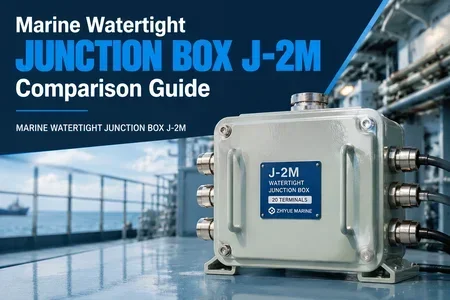
The MARINE WATERTIGHT JUNCTION BOX J-2M is engineered for high-reliability electrical connections in harsh maritime conditions. Its robust construction and standardized interfaces make it a popular choice among shipbuilders and maintenance teams. Compared to earlier designs, the J-2M offers improved cable accommodation and enhanced ingress protection. To understand its position in the market, it is essential to examine its specifications alongside those of comparable models such as the J-1M and industry-standard enclosures.
Key Specifications and Comparison Criteria
When evaluating watertight junction boxes, the following criteria are critical: ingress protection rating, material composition, terminal count and wire gauge range, mounting options, and overall dimensions. Below is a neutral specification comparison between the MARINE WATERTIGHT JUNCTION BOX J-2M and a typical alternative model (Model X).
| Parameter | MARINE WATERTIGHT JUNCTION BOX J-2M | Alternative Model X |
|---|---|---|
| IP Rating | IP66 / IP68 (2m, 24h) | IP66 |
| Material | Marine-grade aluminum alloy (LM6) | Die-cast aluminum |
| Terminal Capacity | Up to 16 terminals, wire 1.5–10 mm² | Up to 12 terminals, wire 1.5–6 mm² |
| Cable Entry | 8 x PG9 + 4 x PG16 (pre-drilled) | 6 x PG11 + 2 x PG16 |
| Mounting | Wall or base plate, stainless steel brackets | Wall mount only |
| Dimensions (mm) | 220 x 180 x 120 | 200 x 160 x 110 |
| Weight | 1.8 kg | 1.5 kg |
| Certifications | IEC 60529, Lloyd's Register type approval | IEC 60529 |
This table highlights that the J-2M provides greater terminal capacity, higher ingress protection, and more flexible cable entry options – factors that directly influence installation complexity and long-term reliability.
Performance Trade-offs and Application Fit
Selecting the right junction box requires balancing technical specifications with operational context. The following compare blocks illustrate two common decision scenarios.
Best suited for installations requiring multiple circuits in a single enclosure. The larger terminal capacity and pre-drilled cable entries reduce the need for secondary junction boxes. Buyer note: Slightly heavier and larger footprint may be a constraint in space-limited areas. Ideal for engine rooms and main switchboards.
Designed for tight spots such as navigation light towers or small control panels. It offers IP66 protection and fewer terminals. Buyer note: Lower initial cost but may require additional boxes for the same circuit count. Suitable for applications where water submersion is not a concern.
How to Choose Between J-2M and Other Models?
The decision should be guided by three factors: environmental exposure, cable management complexity, and future expansion. Use the following evaluation flow to structure your analysis.
Additionally, review the product page for marine electrical connectors to see how the J-2M integrates with other components.
Selection Checkpoints
- Ingress protection must match the highest expected water exposure (immersion vs. splash).
- Terminal count should accommodate 20% future expansion without requiring a secondary box.
- Mounting options: verify bracket compatibility with existing structures.
- Cable entry size and type (metric threads vs. NPT) must align with conduit or gland specifications.
- Certification stamps (e.g., Lloyd's, ABS, DNV) are mandatory for classed vessels.
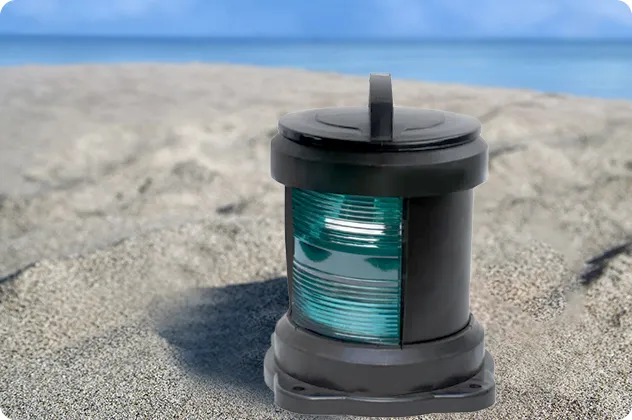
Also consider the complementary product range such as the navigation signal light to understand typical connection requirements.
FAQ
What should buyers evaluate first about MARINE WATERTIGHT JUNCTION BOX J-2M?
Start with fit, evidence-backed requirements, and supplier proof relevant to MARINE WATERTIGHT JUNCTION BOX J-2M before shortlisting vendors.
How can teams reduce procurement risk for MARINE WATERTIGHT JUNCTION BOX J-2M?
Use structured comparison, validate specifications early, and review implementation or quality checkpoints with documented evidence.
Conclusion
The MARINE WATERTIGHT JUNCTION BOX J-2M delivers superior terminal capacity and ingress protection, making it a strong candidate for demanding marine electrical systems. Its trade-off in size and weight is justified by the ability to consolidate connections and reduce overall installation complexity. By using the criteria and comparison blocks provided here, decision-makers can confidently evaluate the J-2M against other models. For further details and to explore the full range of marine electrical connectors, visit the dedicated product page.