Article Overview: Navigation signal lights are critical safety devices mandated by international maritime regulations. This guide explains their purpose, the common types, how they work, the regulatory framework, and practical considerations for procurement and maintenance. It is intended for technical buyers, engineering managers, and operations leaders who need a clear, evidence-based understanding of this equipment category before making purchasing decisions.

What Are Navigation Signal Lights and Why Are They Required?
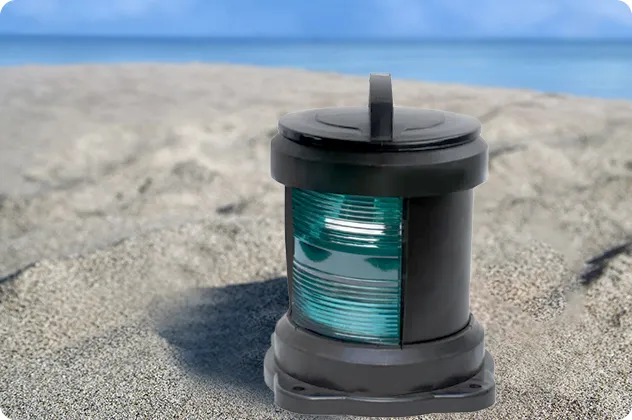
Navigation signal lights, often called running lights or position lights, are fixed lighting fixtures installed on vessels to indicate their position, direction, and status to other watercraft. These lights are essential for collision avoidance, especially during nighttime or reduced visibility conditions. The International Regulations for Preventing Collisions at Sea (COLREGS) mandate specific light configurations for different vessel sizes and types. For example, a power-driven vessel under way must display a masthead light, sidelights (red and green), and a stern light. Without these lights, a vessel is effectively invisible to others, creating severe safety risks.
For technical buyers, understanding the functional requirements is the first step. Signal lights must meet minimum luminous intensity, visibility range, and color specifications. They are not decorative; they are legally required safety equipment. When sourcing from a supplier, one should verify that each Navigation Signal Light complies with the relevant certification (e.g., COLREGS, IMO, or national equivalents). A typical procurement checklist includes checking rated voltage, bulb type, housing material (corrosion-resistant marine-grade metals or UV-stabilized plastics), and ingress protection (IP) rating against water and dust ingress.

How Do Different Types of Navigation Signal Lights Work?
Navigation signal lights can be categorized by their light source (incandescent, fluorescent, or LED), mounting type, and function. Traditional incandescent lights use a filament that glows when current passes through. They are inexpensive but have shorter lifespans and higher power consumption. Marine Incandescent Light fixtures are still available for retrofit applications but are gradually being replaced by more efficient options.
Fluorescent lights offer better efficiency and longer life but require ballasts and may have issues with cold-start performance. For example, a Marine Fluorescent Light might be chosen for interior illumination or as an anchor light in some cases, but they are less common for primary navigation lights due to size and fragility.
LED navigation signal lights are now the preferred choice for most new installations. They provide high efficiency, very long operational life (often over 50,000 hours), and robust resistance to vibration. LEDs produce a sharp, saturated color that meets visibility requirements without the need for colored filters, which can fade over time. Importantly, LED signal lights can be designed to consume minimal power, which is a significant advantage for vessels relying on battery or solar power. One hypothetical vessel upgrade scenario: replacing an existing incandescent masthead light with an LED equivalent reduces power draw from around 25 watts to under 5 watts, while improving mean time between failures from a few hundred hours to tens of thousands of hours.
What International Regulations Govern Marine Signal Lights?
The primary regulatory framework for navigation signal lights is the International Regulations for Preventing Collisions at Sea (COLREGS), specifically Rule 20 through Rule 31. These rules define the required light characteristics: color (white, red, green, yellow), visibility range (e.g., 2 to 6 nautical miles depending on vessel length), and arc of visibility (e.g., 112.5° for sidelights). Additionally, the International Maritime Organization (IMO) provides guidelines for construction and testing. Many flag states also adopt national standards that align with COLREGS.
For equipment manufacturers, compliance often requires third-party testing by a notified body. The test report must confirm that the light output, color, and spread meet the minimum requirements. When evaluating a supplier, ask for the compliance certificate and verify that it covers the specific regulation applicable to your vessel's size and operating area. For example, a marine lighting product intended for commercial shipping typically needs to meet IMO Resolution A.694(17) or similar. Smaller pleasure craft may be subject to less stringent national regulations, but it is always safer to adhere to full COLREGS.

How to Select the Right Signal Light for Your Vessel
Selection involves matching the light type to the vessel's class, operational profile, and existing electrical system. Start by listing the required light positions: masthead, starboard (green), port (red), stern, and all-round (anchor light). Then determine the required visibility range based on vessel length (COLREGS Annex I). Next, choose the light source: LED is generally the best overall choice for new builds and major refits due to reliability and efficiency, but initial cost may be higher than incandescent. Ensure the housing material is compatible with the environment—for example, stainless steel or marine-grade aluminum for saltwater exposure.
Consider the operating voltage (commonly 12V, 24V, or 110V/230V AC) and the power budget. Flood Light Search Light systems may share power supplies, so coordination is advisable. Also evaluate ease of maintenance: some fixtures have replaceable bulbs or modules; others are sealed units. Sealed LED lights generally require less maintenance but are harder to repair if a single LED fails. For vessels operating in hazardous environments, such as tankers or gas carriers, the signal light must also be explosion-proof. In such cases, refer to Explosion Proof Light specifications for additional certification such as ATEX or IECEx.
Another practical consideration is thermal management. LED lights generate heat at the junction, and if not properly dissipated, the light output and lifespan degrade. Reputable manufacturers provide thermal test data. Finally, check for compatibility with existing mounting brackets and wiring. A simple step: request a datasheet or installation manual from the supplier before purchase.
Maintenance and Compliance Considerations
Even the best signal light will fail if not maintained. Regularly clean lenses and housings to prevent salt buildup from dimming the light output. Inspect seals and gaskets for cracking—water ingress is a common failure mode. For incandescent lamps, carry spare bulbs. For LED units, the entire assembly may need replacement after many years, so plan for that lifecycle cost.
Compliance is not a one-time event. During annual inspections, a marine surveyor will check the operation of all navigation lights. Keep records of purchase certificates and test reports. If a light is replaced, ensure the new unit has the same or better certification. Lifebuoy Light and other safety lights often fall under parallel regulations, so it is beneficial to consolidate suppliers where possible. Many marine equipment suppliers, such as Zhiyue Marine, offer integrated solutions that include navigation signal lights, Marine Electrical Connectors, and other accessories, which can simplify procurement and ensure component compatibility.
FAQ
What is the difference between a navigation signal light and a searchlight?
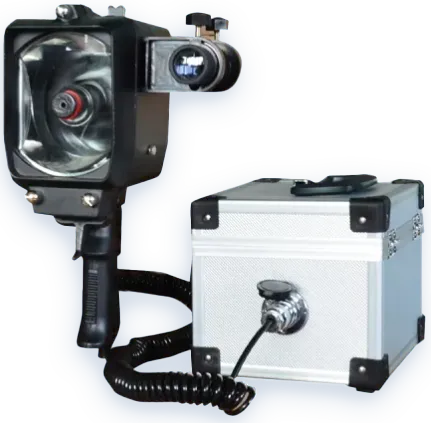
A navigation signal light is a fixed light used to indicate a vessel's position and status as required by COLREGS, while a searchlight is a movable, high-intensity light used for scanning the horizon or illuminating objects. They serve different purposes and are governed by different regulations.
How often should navigation signal lights be tested?
Operationally, lights should be checked before each voyage. A more thorough inspection, including cleaning and seal checks, should be performed quarterly or according to the manufacturer's recommendations. Annual survey testing is also required for commercial vessels.
Can I use standard automotive lights on my boat?
No. Automotive lights do not meet marine visibility, corrosion resistance, or color specifications. They lack the necessary certifications (e.g., COLREGS, IMO) and are not approved for navigation purposes on vessels. Only marine-grade signal lights should be used.
Why are LED navigation lights preferred over incandescent?
LED lights offer longer lifespan, higher energy efficiency, better vibration resistance, and more consistent color output. They reduce maintenance frequency and overall operational cost, making them the standard for modern vessels.
What certification should I look for when purchasing a signal light?
Look for compliance with COLREGS Annex I, IMO resolutions (e.g., A.694(17)), and any applicable national standards. For hazardous areas, additional explosion-proof certifications (ATEX, IECEx) are required. Always request a copy of the test certificate from the supplier.
Conclusion
Navigation signal lights are a fundamental safety component on any vessel, and their selection should be approached with a clear understanding of regulatory requirements, technical performance, and operational context. While the market offers many options, the core decision factors remain: compliance with COLREGS, appropriate visibility range, reliable construction, and compatibility with the vessel's power system. For technical buyers and engineers, investing time in understanding these aspects will lead to better procurement decisions, fewer compliance surprises, and improved safety at sea. To start your selection process, consult a dedicated Navigation Signal Light resource that provides detailed specifications and compliance documentation.