Article Overview: This article helps procurement managers and sourcing teams understand the cost factors behind the price of marine portable searchlight CSD7. It covers material, IP56 protection, customization, and volume pricing without listing specific prices, enabling informed supplier evaluation and RFQ preparation based on evidence from the CSD7 product page.
What factors influence the price of the marine portable searchlight CSD7?
The price of marine portable searchlight CSD7 is driven by material selection (plastic vs. metal alternatives), the IP56 protection level, bulb type (incandescent vs. LED), manufacturing complexity, and order volume—each factor must be assessed during supplier evaluation to ensure cost alignment.
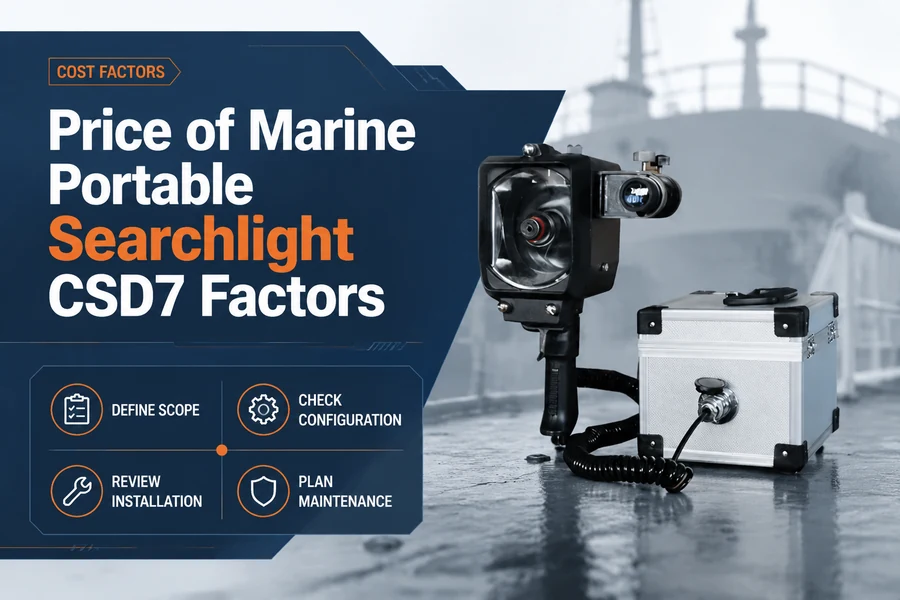
The CSD7 is built with a phenolic plastic shell, which offers corrosion resistance and lightweight handling, keeping base costs lower than metal alternatives. If buyers require metal housings (e.g., stainless steel or brass) for higher impact resistance in rough handling environments, material and machining costs rise notably. The IP56 rating demands robust sealing—gaskets, tight assembly tolerances, and waterproof construction—adding to production expense. The standard bulb is a 60W incandescent with an E27 lampholder; LED retrofit options increase cost due to driver electronics and heat dissipation design. Manufacturing complexity scales with customization: longer cables, special colors, or branding require additional tooling and setup time. Finally, order volume directly affects per-unit cost through economies of scale. For a structured evaluation, use the flow below.
Step 1: Identify material requirements
Determine if standard plastic suffices for your marine environment. Metal upgrades, such as brass or steel, increase cost due to raw material and machining expenses. The CSD7 standard material is plastic; confirm if that meets your needs.
Step 2: Verify protection grade needed
Confirm that IP56 meets your application (e.g., deck use exposed to water jets). Higher ratings like IP67 would further raise cost due to stricter sealing. The CSD7 specification shows IP56 as standard.
Step 3: Specify bulb type
Decide between incandescent (standard 60W) or LED. LED adds cost from driver electronics and thermal management but may reduce maintenance. Inquire about availability for the CSD7.
Step 4: List customization requests
Document cable length, color, branding, or packaging variations. Each adds incremental cost from tooling and setup changes. For example, a 10-meter cable instead of standard length increases material cost.
Step 5: Estimate order quantity
Gather expected volume to leverage quantity discounts. Larger orders lower per-unit cost. The CSD7 product page notes bulk order discounts.
When evaluating suppliers, request a detailed breakdown of these cost drivers in the RFQ. For a hypothetical scenario: a buyer needing 500 units with custom branding and a 10-meter cable should expect a per-unit cost higher than standard 100-unit open orders. Transparent quotes allow apples-to-apples comparison.
How does the IP56 rating affect the cost of a marine portable light?
Achieving IP56 protection requires enhanced sealing against water jets and dust ingress, demanding higher-quality gaskets, tighter assembly tolerances, and more durable housing—each element increases production costs compared to lower-rated enclosures like IP20 or IP44.
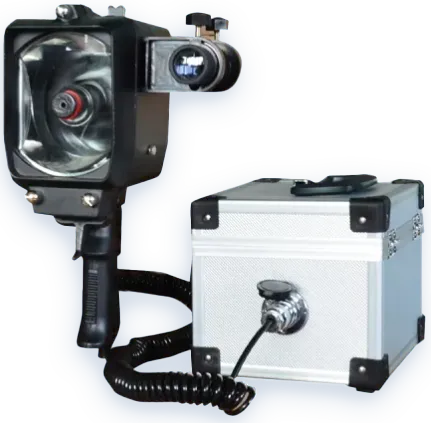
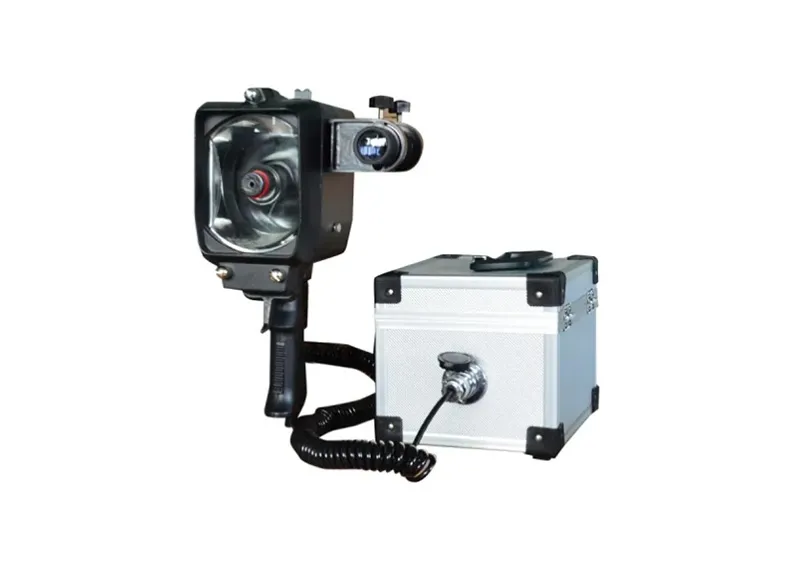
The IP56 rating means the light is protected against dust (limited ingress, no harmful deposits) and powerful water jets from any direction. To meet this, the CSD7 uses a water blowout prevention structure, phenolic plastic shell, glass lampshade, and protective net. The rubber handle also contributes to consistent sealing. Compared to a lower IP rating, IP56 adds cost through:
- Specialized gasket materials (e.g., silicone or neoprene) that resist marine environments and must be replaced during maintenance. The tighter seal increases component cost.
- Precision molding or machining of housing parts to ensure tight fit and consistent compression of seals. Plastic injection molds for the CSD7 shell require higher precision to avoid gaps.
- Additional quality control testing, such as water jet tests, to certify compliance per the Ingress Protection standard. Suppliers may pass these costs into the unit price.
Buyers should verify that the supplier performs routine production sampling or batch testing to confirm ongoing IP56 compliance. In a hypothetical example, a supplier that tests every 100th unit may have lower per-unit costs than one testing every 10th unit. Requesting documentation of IP testing procedures helps assess quality risk.
Are there customization options for the CSD7 that impact pricing?
Yes, customization options such as alternative cable lengths, color variations, and branding affect pricing because they require additional tooling, setup time, and production steps that increase per-unit costs, with some options having one-time fees.
While the standard CSD7 comes with a fixed cable length and transparent glass, buyers often request changes to suit specific vessel layouts or operational needs. Common customizations include:
- Cable length
- Standard lengths may be extended or shortened. Longer cables add material cost and may require different strain relief or connectors, raising both material and labor costs. For instance, a 15-meter cable instead of 5 meters increases per-unit cost proportionally.
- Color
- Handle or housing color changes often require minimum batch quantities to justify production line changeovers, and may involve additional paint or pigment formulation. A hypothetical request for custom RAL color may incur a setup fee.
- Branding
- Custom logos or markings involve silk-screening, embossing, or label application, with one-time tooling fees and per-unit application costs. For small orders, the tooling cost can significantly raise per-unit price.
- Packaging
- Individual retail packaging versus bulk packaging affects labor, material, and logistics costs. Bulk packaging typically reduces per-unit overhead. Stating packaging preferences in the RFQ avoids surprises.
When requesting customization, ask the supplier for a breakdown of setup costs (one-time) versus per-unit increments. This transparency helps you evaluate trade-offs between specific features and budget constraints. For example, a custom color may be worth the one-time fee if it aligns with fleet branding.
What is the typical cost range for OEM orders of the CSD7?
OEM orders for the CSD7 benefit from volume-based pricing tiers; larger order quantities reduce per-unit costs through economies of scale, though exact discounts depend on negotiation and the specific order parameters specified in the RFQ, as stated on the CSD7 product page.
Manufacturers like ZHIYUE Marine commonly offer tiered pricing based on quantity. For instance, a hypothetical breakdown: orders of 100 units may have a baseline per-unit cost, while 500 units receive a moderate discount (e.g., 5–10% reduction), and 1,000+ units achieve a more favorable tier (e.g., 10–20% reduction). The discount magnitude depends on factors such as material availability, production scheduling, and customization complexity. The CSD7 product page states: “We offer discounts for bulk orders, contact us for details!” indicating willingness to negotiate. Additionally, consider annual volume commitments that might secure better rates even across multiple shipments.
The per-unit cost decrease with volume is due to fixed-cost amortization (tooling, setup) spread over more units. Buyers should obtain quotes for multiple order volumes to understand the discount curve. For a hypothetical scenario: if the baseline per-unit cost for 100 units is X, then for 500 units it might be 0.9X, and for 1,000 units 0.8X. These figures are illustrative; actual discounts vary. Requesting a volume price matrix from the supplier is a best practice.
FAQ
Does the CSD7 come with an LED option?
The standard CSD7 uses a 60W incandescent bulb with an E27 lampholder. LED retrofit options may be available upon request; inquire with the supplier for feasibility and cost impact, as LED conversion involves driver electronics and heat dissipation design that can increase the unit price.
What is the minimum order quantity for the CSD7?
Minimum order quantities (MOQ) vary by supplier. For the CSD7, contact the manufacturer directly for MOQ details; bulk orders typically qualify for volume discounts, but small quantities can also be purchased for evaluation. Expect MOQ to be higher for customized versions.
How does material choice affect durability and cost?
Plastic housing offers lightweight and corrosion resistance at a lower cost. Metal alternatives (e.g., brass or stainless steel) provide higher impact and heat resistance but increase material and machining costs. Choose based on the expected operating environment, such as exposure to chemicals or heavy physical abuse.
Can the CSD7 be used with different voltages?
The CSD7 is offered in 220V and 24V versions. Ensure you specify the required voltage in your RFQ, as the internal wiring and bulb may differ, potentially affecting cost and lead time. Some suppliers may also offer dual-voltage configurations upon request.
Conclusion: Key Cost Factors for Your CSD7 Procurement
Understanding the price drivers of the CSD7 portable searchlight helps procurement managers prepare effective RFQs and avoid surprises. The main factors are material, IP56 protection, bulb type, customization, and order volume. By clearly defining your requirements and leveraging volume discounts, you can optimize total cost of ownership. For detailed specifications and to initiate a quote, visit the CSD7 Handheld Marine Searchlight product page.