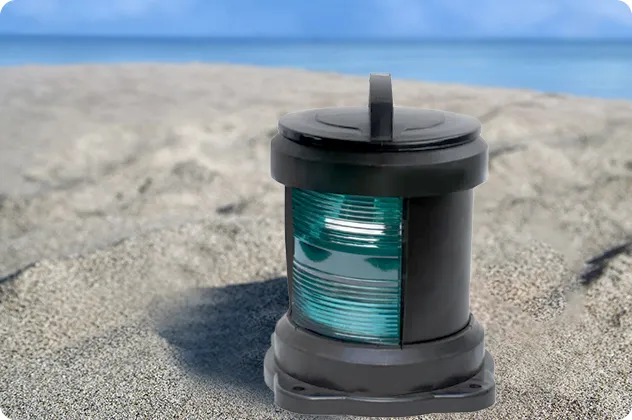
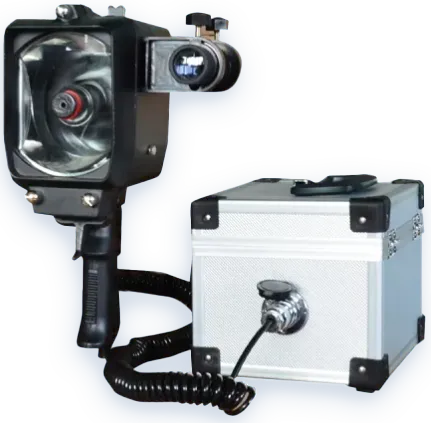
Article Overview: This guide helps procurement managers, sourcing teams, and project engineers prepare supplier evaluations and RFQs for marine navigation signal lights. It covers compliance standards, key specifications, supplier verification, and ship-size considerations, using evidence from products such as the CXH1-3 and CXH1-3P series.
What Compliance Standards Apply to Marine Navigation Signal Lights?
Marine navigation signal lights must comply with national standards such as China's GB/T 3028-1995, which specifies visibility range, color, and arc of visibility. Buyers should verify that suppliers provide a certificate of conformity to the relevant standard before issuing an RFQ.
National standards like GB/T 3028-1995 define exact requirements for light intensity, color coordinates, and minimum visibility distances. For example, the CXH1-3 and CXH1-3P product pages explicitly reference compliance with GB/T 3028-1995. For vessels operating internationally, additional type approvals from classification societies (e.g., CCS, DNV, Lloyd's) may be required. Always request a copy of the test report or certificate before issuing an RFQ. Without documented compliance, installation may be rejected during survey, leading to costly delays. The COLREGs Part C also outline technical specifications; however, national standards often serve as equivalent criteria for domestic vessels. For vessels transiting the Panama Canal, a dedicated Panama steering light (e.g., CXH7) with blue color and specific beam pattern may be mandated. Verify such route-specific requirements with your operational team.

How to Evaluate Supplier Specifications Before Issuing an RFQ?
Before issuing an RFQ, verify that the supplier can provide a datasheet covering IP rating, material, voltage, power, lampholder type, and certification. Cross-check these against your vessel's installation requirements and classification rules to avoid non-conforming products.
Use the following structured evaluation steps to shortlist vendors:
Step 1: Verify Ingress Protection (IP) Rating
The IP rating must suit the installation environment. Deck-mounted lights typically require IP56 or higher. The CXH1-3 series offers IP55, while the CXH1-3P and CXH17 models achieve IP56. In a hypothetical scenario where a light is installed in a sheltered location, IP55 may be acceptable, but IP56 provides better protection against water jets and heavy seas. Always check the product datasheet for exact IP rating; if not listed, request it from the supplier.
Step 2: Check Material Compatibility
Housings are available in steel (with anti-corrosion coating), stainless steel, or engineering plastic. Steel is cost-effective but less corrosion-resistant; stainless steel and plastic are preferred for marine environments. For instance, the CXH1-3 uses steel with special paint, while the CXH1-3P uses PA+GF plastic. The CXH17 uses stainless steel and glass. Consider the expected lifespan and maintenance cost when choosing material. To assess long-term reliability, request salt-spray test reports if available.
Step 3: Validate Electrical Parameters
Confirm voltage (12V, 24V, or 220V) and power rating (typically 25W for small lights, up to 60W for larger). Ensure the lampholder type (e.g., BAY15D, B15D, E27) matches available bulbs. The CXH1-3 uses B15D; CXH17 uses BAY15D; CXH14 uses E27. Also verify the bulb type (incandescent or LED) and its rated life. For example, the CXH1-3P uses special bulbs with average life up to 700 hours. If using LEDs, confirm color coordinates are within standard tolerances.
Step 4: Review Certification Documentation
Request a copy of the standard compliance certificate (e.g., GB/T 3028-1995) and any additional classification society approvals. Without these, installation may be rejected during survey. Some products, like the CXH1-3P, list the standard on their specification table. Ask for a digital copy prior to RFQ. Also request a declaration of conformity for the entire batch if ordering multiple units.
Step 5: Assess Manufacturer Experience
Prefer suppliers with demonstrated experience in marine lighting. Check if they offer a complete range for various vessel sizes. For example, ZHIYUE GROUP provides models for vessels under 12 m (CXH1-3, CXH1-3P) and over 50 m (CXH17). This indicates familiarity with different regulatory requirements. Ask for references or case studies from similar procurement projects.
For a vessel under 12 m, the CXH1-3 (steel/glass, IP55) may be sufficient, while a vessel operating in harsh conditions might require the CXH1-3P (plastic/PC, IP56). Always evaluate the trade-off between unit cost and long-term reliability. Include total cost of ownership in your RFQ evaluation criteria.
What Are the Key Technical Specifications to Verify for Navigation Lights?
The essential specifications include visibility range in nautical miles, arc of visibility, color, bulb type, protection class (IP), and operating temperature. These must match the vessel's statutory requirements based on length and route. Verify each specification against the product datasheet.
The table below compares specifications for common models from a single manufacturer's range, illustrating how choices vary by application. This data is sourced from the product pages of ZHIYUE GROUP. Note that for some models, certain specifications (e.g., visibility for CXH17) are not explicitly listed on the product page; buyers should request these details directly.
| Model | Ship Length | Visibility | IP Rating | Material | Voltage | Power | Lampholder | Color Options |
|---|---|---|---|---|---|---|---|---|
| CXH1-3 (starboard) | <12 m | 1 n.m. | IP55 | Steel/glass | 12V/24V | 25 W | B15D | Green |
| CXH1-3P (starboard) | <12 m | 1 n.m. | IP56 | Plastic (PA+GF)/PC | 12V/24V | 25 W | B15D | Green |
| CXH17 (example for ≥50 m) | ≥50 m | Not listed | IP56 | Stainless steel/glass | 220V/24V | 60 W | BAY15D | Transparent |
| CXH14 (flashing) | All | Not listed | IP56 | Plastic | 220V | 30 W LED | E27 | Transparent/Red/Green |
| CXH7 (Panama steering) | All (canal) | Not listed | Not listed | Stainless steel/PC | 220V | 25 W | BAY15D | Blue |
Note that arc of visibility varies by light type. For example, starboard and port lights have a 112.5° arc, masthead light 225°, stern light 135°, and all-round light 360°. Refer to the product datasheet for precise values. Ensure the chosen model provides the correct horizontal arc for its intended position as per COLREGs. Also check operating temperature range; all models shown operate from -30 °C to 55 °C, which is suitable for most marine environments. If your vessel operates in extreme cold or heat, confirm the range meets requirements.
How Does Ship Size Affect Navigation Light Selection?
Ship length determines the required visibility, number, and placement of navigation lights. Vessels under 12 m typically require 1 n.m. visibility lights, while those 50 m and above need at least 2 n.m. COLREGs and national standards provide specific tables for light requirements based on vessel length.
COLREGs Part C outlines the technical specifications for lights based on vessel length, though national standards like GB/T 3028-1995 provide equivalent criteria. For smaller craft (<12 m), lights may have reduced visibility (1 n.m.) and simpler mounting. For larger vessels, increased visibility and higher IP ratings are expected. Additionally, specific routes (e.g., Panama Canal) may mandate additional lights like the Panama steering light CXH7, which is specifically designed for that purpose. Always confirm the applicable rule set with your flag administration or classification society. When selecting a supplier, ask whether they offer a full set of lights for your vessel size. This reduces compatibility risk and simplifies procurement. For example, the CXH1-3 series includes starboard, port, masthead, stern, and all-round lights, each with appropriate arc and color. The CXH1-3P series offers the same coverage but with higher IP rating and plastic housing. For vessels over 50 m, the CXH17 provides a single light suitable for masthead or other positions, but you may need to mix models to complete the set. In addition, some lights serve multiple functions. For instance, the all-round light (CXH6-3 or CXH6-3P) can be used as an anchor light. Verify the visibility and arc for the intended function. The table on the CXH1-3 product page shows the all-round light has 360° arc and 2 n.m. visibility, suitable for anchoring on vessels under 12 m.
Consider also that vessels with length between 12 m and 50 m may have intermediate requirements. Refer to the specific standard applicable to your vessel's flag state. A common mistake is assuming one light type fits all; always cross-check the minimum visibility and arc for each position.
FAQ
What is the difference between the CXH1-3 and CXH1-3P?
The CXH1-3 has a steel housing and glass lampshade with IP55 protection, while the CXH1-3P uses high-strength plastic (PA+GF) with a PC lampshade and achieves IP56. Both comply with GB/T 3028-1995 and are intended for vessels under 12 m. The choice depends on corrosion resistance and budget.
Which IP rating is required for outdoor navigation lights?
For deck-mounted navigation lights exposed to weather, IP56 or higher is recommended. Some products like the CXH1-3 achieve IP55, which may be acceptable in sheltered locations but is less robust in heavy spray. Check the installation environment when deciding.
Can I use LED navigation lights instead of incandescent?
Yes, provided the LED light meets the same visibility, color, and arc requirements. The CXH14 is an LED flashing light with 30 W power consumption and longer lifespan. Verify that the LED source is approved by the relevant classification society and that the color coordinates comply with standards.
Do I need separate certifications for each model?
Generally yes – each model should have its own type approval or test certificate. The CXH1-3 and CXH1-3P series carry GB/T 3028-1995 certification. For international vessels, seek additional approvals from bodies like CCS or DNV. Some suppliers can provide a certificate for the entire range if the testing covers multiple models.
How do I ensure the light has the correct arc of visibility?
Check the product specification table for the arc (e.g., starboard light 112.5°, masthead 225°). The manufacturer's datasheet should provide this. If not, request it before purchase. Incorrect arc can lead to non-compliance during inspection.
Conclusion and Pre-Purchase Checklist
Selecting the right marine navigation signal light requires verifying compliance standards, technical specifications, and supplier credentials. Use this checklist before finalizing your RFQ:
- Confirm the applicable national standard (e.g., GB/T 3028-1995) and any classification society requirements.
- Match visibility (n.m.) and arc of visibility to vessel length and light position.
- Verify IP rating (IP56 preferred for exposed locations).
- Check material suitability for the marine environment (stainless steel, plastic, or coated steel).
- Ensure electrical compatibility (voltage, lampholder type, power).
- Request certification documents (type approval, test report).
- Evaluate supplier experience with marine lighting and ability to supply a complete set.
- Consider route-specific requirements (e.g., Panama Canal steering light).
For detailed specifications and to request a quote, visit the CXH1-3 product page or browse the full marine navigation signal light category.