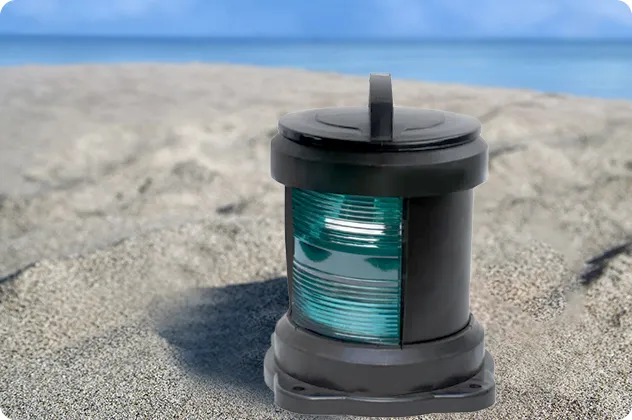
Article Overview: This article provides an objective comparison of marine navigation signal lights, helping CTOs, technical architects, procurement teams, and evaluation committees assess options based on technical fit, operating conditions, and risk. We examine key criteria such as light source technology (LED, fluorescent, incandescent), durability, certification, and total cost of ownership. The goal is to equip buyers with a decision framework to select the right signal light for their vessels.
Marine navigation signal lights are mandatory equipment on vessels of all sizes, governed by international regulations such as COLREGs (International Regulations for Preventing Collisions at Sea). The choice of signal light affects visibility, safety compliance, maintenance frequency, and operational costs. With multiple technologies available—LED, fluorescent, and incandescent—buyers must weigh trade-offs in luminous efficacy, lifespan, power consumption, and ruggedness. This comparison guide breaks down the evaluation criteria into actionable dimensions for procurement and engineering teams.
Understanding Marine Navigation Signal Light Types
Navigation signal lights fall into several categories based on their light source and construction. The three dominant technologies are incandescent, fluorescent, and LED. Each has distinct characteristics that influence suitability for different vessel types and operating environments.
Incandescent signal lights use a tungsten filament heated to incandescence. They produce a warm, continuous spectrum and are inexpensive upfront. However, they have a short operational life (typically 1,000–2,000 hours) and relatively low luminous efficacy (about 10–17 lumens per watt). Their fragility to vibration and mechanical shock makes them less ideal for high-speed or rough-sea applications.
Fluorescent signal lights, such as those from the Marine Fluorescent Light category, use a gas discharge process with a phosphor coating. They offer better efficacy (50–100 lm/W) and longer life (6,000–15,000 hours). However, performance can degrade in cold temperatures, and the ballast electronics add complexity. They are still common on older vessels and in cost-sensitive retrofits.
LED signal lights have become the preferred choice for new builds and upgrades. They achieve extremely high efficacy (100–200 lm/W), lifespans exceeding 50,000 hours, and excellent resistance to vibration and temperature extremes. The cost per unit is higher, but total ownership cost often favors LEDs over time. When evaluating a Navigation Signal Light, buyers should consider whether the fixture is designed for direct replacement of legacy incandescent units or requires new wiring.
Key Comparison Criteria: Technology, Visibility, and Compliance

When comparing signal lights, focus on three primary dimensions: luminous intensity, beam pattern, and compliance with navigation rules. COLREGs specify minimum visibility ranges for different vessel lengths and light colors (white, red, green, yellow). A masthead light on a vessel over 50 meters, for example, must be visible for at least 6 nautical miles. LEDs easily meet these requirements with lower power draw.
Beam pattern is equally critical. Signal lights must produce a defined horizontal arc (e.g., 112.5° for sidelights) without spillover that could be misinterpreted. High-quality optics, such as multi-reflector arrays or prismatic lenses, ensure precise cutoffs. In lower-cost fixtures, beam patterns may be inconsistent, leading to compliance risk. Procurement teams should request photometric data sheets and third-party test reports.
Certification is a non-negotiable checkpoint. Look for lights that are type-approved by recognized classification societies such as DNV, Lloyds Register, ABS, or CCS (China Classification Society). The approval scope should match the vessel's flag state requirements. Uncertified lights, even if technically identical, can delay inspections and void insurance. For hazardous areas, an Explosion Proof Light is mandatory—never substitute a general-purpose signal light in such zones.
Evaluating Durability and Environmental Resistance
Marine environments impose extreme conditions: salt spray, humidity, UV radiation, temperature swings, and mechanical shock. The housing material, sealing method, and internal component protection determine long-term reliability.
Common housing materials include marine-grade aluminum (often with polyester powder coating), stainless steel (316L recommended), and UV-stabilized polycarbonate. Aluminum is lightweight but can corrode if the coating is damaged. Stainless steel is highly corrosion-resistant but heavier and more expensive. Polycarbonate is lightweight and impact-resistant but may yellow over time under intense sunlight.
Ingress protection (IP) rating is essential. For deck-mounted signal lights, IP66 or higher is typical, meaning dust-tight and protected against powerful water jets. Some fixtures offer IP67 (immersion up to 1 meter) for locations prone to temporary submersion. Electrical connectors must also be robust; consider using Marine Electrical Connectors that are corrosion-resistant and sealed to prevent ingress.
Temperature range is another factor. LEDs perform well from −40°C to +70°C, while fluorescent lights may dim or fail to start below −20°C. In cold storage zones or arctic routes, LEDs are the clear choice. For engine room or hot climate applications, ensure the fixture's thermal management can dissipate heat without reducing lifespan.
Total Cost of Ownership: Beyond the Purchase Price

A common pitfall in procurement is focusing solely on initial acquisition cost. Total cost of ownership (TCO) includes replacement lamps, labor for maintenance, energy consumption, and potential downtime. An incandescent signal light that costs $30 may need lamp replacements every 2,000 hours—at roughly $5 per lamp and 30 minutes of technician time, the recurring cost quickly surpasses the upfront price of a $150 LED fixture.
Energy consumption differences are significant. A 10-watt LED masthead light replaces a 60-watt incandescent. Over 10 years of continuous operation (which is conservative given LEDs often outlast 10 years), the energy savings alone can exceed $400 per fixture depending on local electricity rates. For vessels with hundreds of signal points—such as large cargo ships or offshore platforms—the cumulative savings are substantial.
Maintenance logistics also factor in. LED fixtures are typically sealed units with no user-serviceable parts; if they fail (rarely), the entire unit must be replaced. Incandescent and fluorescent lights allow bulb swapping, but require stocking spares and organizing crew time. In remote or high-seas operations, reduced maintenance intervals are a strong advantage for LED systems.
Decision Framework for Procurement Teams
To systematically evaluate signal light options, use the following checklist adapted from industry best practices. This framework applies to any supplier, including those offering Navigation Signal Light for vessels.
- Step 1 – Define operating environment: Vessel type, route (coastal, ocean, arctic), ambient temperature range, exposure to hazardous gases.
- Step 2 – Identify regulatory requirements: Flag state, classification society, specific COLREG visibility distances for each light position.
- Step 3 – Evaluate light source technology: Compare efficacy, lifespan, dimming capability, and cold-weather performance. Prioritize LED where possible.
- Step 4 – Verify certification and testing: Request type approval certificates, photometric reports, and IP/IK ratings. Cross-check with class society databases.
- Step 5 – Compute TCO over expected life (10–15 years): Include purchase cost, spares, energy, labor, and downtime risk. Use a conservative scenario.
- Step 6 – Assess supply chain and support: Are spare parts or replacement units available globally? What is the warranty terms and lead time?
This framework helps avoid over-specification (paying for features not needed) and under-specification (compromising safety). For example, a harbor tug operating only in sheltered waters may not need the highest IP rating, while an offshore supply vessel requires ultimate corrosion resistance and redundant power options.
Frequently Asked Questions
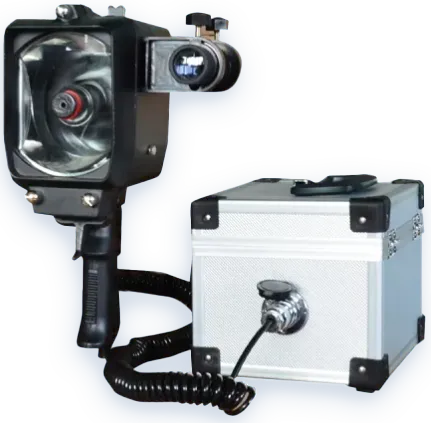
- What is the difference between a navigation signal light and a searchlight?
- Navigation signal lights are fixed, directional lights used to indicate vessel presence and maneuvering status according to COLREGs. Searchlights are movable, high-intensity lights used to illuminate objects or pathways—not for collision avoidance compliance.
- Can I retrofit LED bulbs into an existing incandescent fixture?
- In many cases, yes—but the replacement must maintain the original beam pattern and intensity. Use retrofit LED lamps specifically designed for navigation signals, and verify they are type-approved. Some classification societies require a new fixture certification.
- Are fluorescent signal lights still acceptable on new vessels?
- Yes, but their use is declining. Fluorescent lights can still meet COLREG requirements, but their shorter life, cold‑weather sensitivity, and mercury content make them less attractive than LEDs for most new builds.
- How often should I replace signal lights?
- For incandescent: replace every 1,000–2,000 operating hours or annually, whichever comes first. Fluorescent: every 2–5 years depending on ballast reliability. LEDs: typically 50,000+ hours; replace only when output drops below required minimum or unit fails.
- What certification marks should I look for?
- Common marks include DNV-ST-0156, Lloyds Register (LR), American Bureau of Shipping (ABS), Bureau Veritas (BV), and China Classification Society (CCS). For lights used in hazardous zones, also check ATEX or IECEx certification.
Conclusion
Selecting the right marine navigation signal light is a decision that impacts safety, compliance, and operational cost. By comparing technologies on objective criteria—luminous efficiency, environmental resistance, certification, and total cost of ownership—buyers can make informed choices that align with their vessel's operational profile and budget. While LED solutions currently offer the best balance of performance and lifecycle value, the final decision should always be grounded in specific application requirements and verified by independent test data.
For further resources, explore our Applications section to see how signal lights integrate with broader marine lighting systems. If you need assistance evaluating a specific scenario, contact a trusted supplier who can provide detailed photometric data and compliance documentation.
Related site pages: Navigation Signal Light, Home, Product.