Article Overview: This guide provides an objective comparison framework to help buyers evaluate and select navigation signal lights for marine vessels and offshore installations. It highlights common implementation traps—compliance gaps, interoperability failures, and hidden costs—and offers structured evaluation criteria, technology trade-off analysis, and a procurement checklist to support informed decision-making.

Selecting the right navigation signal light is rarely straightforward. Procurement teams, technical architects, and CTOs often discover hidden implementation traps only after deployment—ranging from compliance gaps to interoperability failures. This buyer-oriented guide explains why these traps occur and how to avoid them through a structured comparison of specifications, technologies, and total cost of ownership.
Why Implementation Traps Are Common in Signal Light Deployments
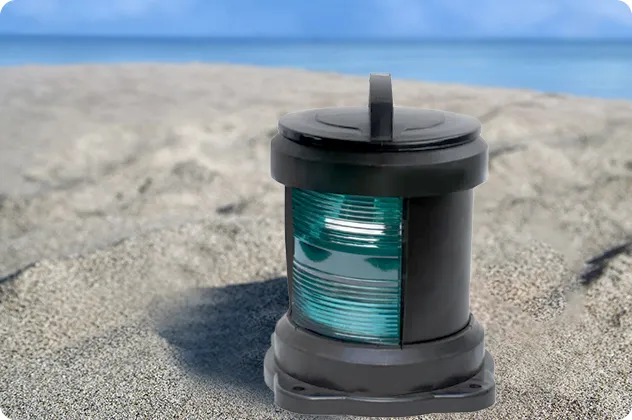
Signal lights are critical for maritime safety, yet their implementation frequently reveals mismatches between intended specifications and real-world performance. Common traps include underestimating environmental constraints (e.g., saltwater corrosion, vibration), misinterpreting certification standards (e.g., COLREGS, IMO requirements), and assuming compatibility with existing electrical systems. For example, a fleet operator might select an LED signal light based solely on lumen output, only to discover that its beam pattern does not meet the required horizontal divergence for their vessel class. Such oversights can delay commissioning and inflate costs.
Another recurring issue is the disconnect between the light fixture and its supporting infrastructure—connectors, cabling, and power supplies. While the light itself may be certified, the entire assembly might not be. This is why evaluating the full system, including marine electrical connectors and mounting hardware, is essential early in the process.
Critical Comparison Criteria for Signal Light Systems
When comparing signal light solutions, buyers should evaluate across four dimensions: technical specifications, operational lifecycle, compliance burden, and total cost of ownership (TCO). The following table summarizes key specification differences across common lighting technologies.
| Criteria | Fluorescent | Incandescent | LED |
|---|---|---|---|
| Luminous efficacy (lm/W) | 50–70 | 10–20 | 80–150 |
| Typical lifespan (hours) | 10,000 | 1,000–2,000 | 50,000+ |
| Warm-up time | Short (strike delay) | Instant | Instant |
| Vibration sensitivity | Moderate | High (filament) | Low |
| Color consistency | Good with proper ballast | Constant but warm tint | Excellent, but binning matters |
| Maintenance interval | Periodic lamp replacement | Frequent bulb changes | Minimal |
Buyer-side risk: LED lights often promise lower TCO, but if the driver electronics are not marine-grade, failure rates can offset savings. Similarly, fluorescent lights require ballasts that may not be compatible with certain vessel power systems. Incandescent lights, while simple, incur higher crew labor costs for replacements. Always request documentation on driver durability and ballast specifications.

Technology Trade-Offs: Fluorescent vs. Incandescent vs. LED
Each technology presents distinct trade-offs that influence implementation success. For example, LED signal lights offer long life and low power draw, but their beam pattern can be more challenging to control—some lenses create hot spots or uneven intensity. A real-world scenario: a vessel operator replaced incandescent lights with LEDs without checking the driver’s voltage tolerance, leading to flicker under generator load. Such issues are avoidable through specification matching.
Fluorescent lights, such as those found in the marine fluorescent light category, remain popular for their diffuse illumination and lower upfront cost, but they require careful handling of lamp disposal and ballast selection. Incandescent lights are disappearing from new builds due to efficiency regulations, yet they are still specified for certain legacy replacements where dimming compatibility is needed. Buyers should map each technology to their operational profile: if the vessel operates in extreme cold, LED efficiency drops; if the environment has high humidity, fluorescent starter circuits may corrode.
Another important factor is compatibility with existing marine electrical connectors. Using a connector that is not IP-rated or not resistant to salt spray can become a point of failure regardless of the light technology chosen. Always verify connector specifications alongside the light fixture.
Compliance, Certification, and Documentation Traps

Signal lights must meet international regulations (IMO COLREGS, SOLAS) and often class society requirements (Lloyd’s, DNV, ABS). A common trap is accepting a manufacturer’s self-declaration without third-party certification. For instance, a light may claim “COLREGS compliant” but diverge from the required chromaticity coordinates. The result: port state control detentions.
Documentation is another overlooked area. Buyers should demand a complete compliance dossier including test reports, type approval certificates, and wiring diagrams. Without these, retrofit projects can stall during survey. For new builds, integrating signal lights with the vessel’s alarm and monitoring system (e.g., failure detection) requires clear interface documentation. Incomplete documentation can lead to integration delays and change orders.
We recommend requesting samples for in-house photometric testing before bulk procurement. A hypothetical example: a fleet operator ordered 200 LED Navigation Signal Light units based on datasheet values, only to find that actual intensity fell below the minimum required for their operations. Advance testing would have revealed this gap.
Procurement and Integration Checklist
To avoid implementation traps, structured evaluation is key. Use the following checklist during vendor assessment:
- Verify that the signal light’s photometric performance (luminous intensity, beam spread) matches the vessel’s COLREGS category (e.g., masthead, sidelight, stern).
- Confirm operating voltage range and power quality tolerance (e.g., 24V DC systems may see transients up to 36V).
- Check environmental ingress protection (IP56 minimum for exposed decks) and material compatibility (e.g., UV-resistant housing, stainless steel hardware).
- Obtain certified test reports from an independent lab (e.g., ISO 17025 accredited).
- Review spare parts availability and lead times—especially for lamps, ballasts, or LED modules.
- Assess the vendor’s after-sales support: are field service engineers available? What is the warranty claim process?
- Compare total cost of ownership over a 5-year horizon, including energy, replacement components, and labor.
- Request integration documentation: wiring diagrams, connector pinouts, and recommended cable glands.
A decision framework for procurement teams: assign weightings to each criterion based on your operational context. For example, a cargo ship with global routes may prioritize certification breadth and ruggedness, while a ferry with frequent dockings may prioritize ease of maintenance and low spares cost. Use this weighted matrix to shortlist vendors, then conduct a pilot installation before fleet-wide rollout.
Consider also the broader product ecosystem. A supplier offering compatible lifebuoy lights and connectors can simplify inventory management and reduce compatibility risks.
Frequently Asked Questions
- Q: What is the most common compliance trap for signal lights?
- A: Relying solely on manufacturer claims without independent certification. Always request type approval from recognized societies like DNV or ABS.
- Q: How do I choose between LED and fluorescent signal lights for a new build?
- A: Consider the vessel’s operating environment. LED suits new builds with stable power and minimal vibration; fluorescent is still viable for retrofits where cost-per-unit is critical, but factor in lamp disposal regulations.
- Q: What should I check in the electrical interface?
- A: Verify connector type (e.g., cable gland thread, pin configuration) and ensure the power supply can handle inrush current. LEDs can have high inrush if drivers use capacitive inputs.
- Q: How important is color temperature for navigation lights?
- A: IMO specifies chromaticity coordinates for red, green, and white lights. Use a certified photometer to verify—perceived color can shift with temperature and age.
- Q: Should I buy signal lights as standalone units or as part of a system package?
- A: A system package from a single vendor often ensures better compatibility and single-source responsibility, but may limit flexibility. Evaluate total integration risk versus cost.
Conclusion
Signal light implementation is not a commodity purchase—it demands careful upfront comparison against operational, compliance, and integration criteria. By using the framework outlined here—structured comparison, technology trade-off awareness, documentation diligence, and a weighted decision matrix—buyers can avoid the most common traps. The key is to treat signal lights as part of a larger marine electrical system, not isolated components. Early engagement with suppliers that provide transparent test data and flexible support can significantly reduce implementation risk. Ultimately, a methodical buyer-side approach will yield a reliable, compliant, and cost-effective navigation lighting solution.