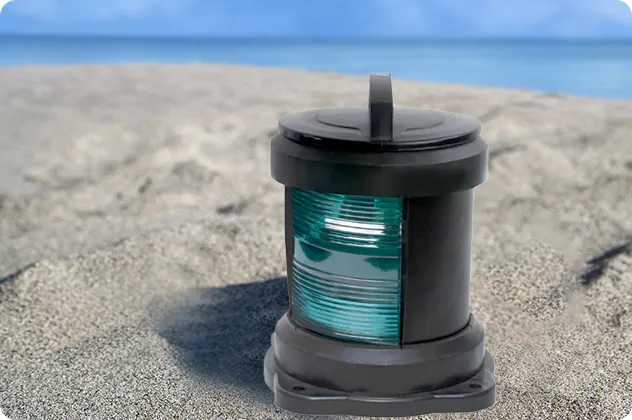
A chief officer preparing a vessel for a morning departure faces a practical question that the COLREGs text answers in a way that is easy to misread: the lights were on all night, the sun is now well above the horizon, and the visibility is good. Do the navigation lights stay on, or do they come off?
The short answer is that under ordinary daylight conditions with good visibility, they are not required—and in fact, a strict reading of the rule discourages leaving unauthorised lights burning. But that short answer becomes misleading the moment visibility deteriorates, or the vessel is not simply “underway” in the plain sense. A bulk carrier proceeding through a rain squall at 10:00, an anchored tanker waiting for a berth, and a vessel not under command after a machinery failure are three different daylight scenarios with three different signal obligations, and only one of them is resolved by switching the navigation lights off.
This guide works through the actual rule structure rather than the shorthand. It is written for the officer or superintendent who needs to make a defensible daylight signalling decision, not for a classroom exercise in memorising rule numbers.
Rule 20 is where the daylight question is settled, and it is worth reading as a three-part structure rather than a single sentence.
Rule 20(b) establishes the default: the rules concerning lights “shall be complied with from sunset to sunrise, and during such times no other lights shall be exhibited” that could be mistaken for the prescribed lights, impair their visibility or distinctive character, or interfere with the keeping of a proper lookout. That is the ordinary nighttime regime.
Rule 20(c) is the exception that governs daylight. It states that the prescribed lights “shall, if carried, also be exhibited from sunrise to sunset in restricted visibility and may be exhibited in all other circumstances when it is deemed necessary”. Two words in that sentence carry the entire daylight logic: “in restricted visibility” and “may”. In restricted visibility during daylight, the lights must be exhibited. In all other daylight circumstances, exhibition is permissive rather than mandatory—it is a judgement call, not a default requirement.
Rule 20(d) sits alongside this and addresses a different signalling channel entirely: “The regulations concerning shapes shall be complied with by day”. Shapes—balls, diamonds, cones, cylinders—are the daytime counterparts to certain light signals, and they operate on a day-only schedule. A vessel that treats “navigation lights off by day” as the whole compliance picture while ignoring shapes has addressed half of Rule 20.
The practical consequence is that daylight compliance is not a binary “lights on or lights off” decision. It is a decision about which signalling mode applies to the vessel’s actual condition at that moment: lights under Rule 20(c) if visibility is restricted, shapes under Rule 20(d) if the vessel’s status requires a day signal, or neither if the vessel is simply underway in clear daylight with no special status. The selection logic that connects these modes to vessel type and length is set out in the broader marine navigation light selection guide, which this article assumes as background.
The phrase “restricted visibility” in Rule 20(c) does not mean “visibility that the officer of the watch finds inconvenient.” It carries the same meaning as elsewhere in the rules: any condition in which visibility is restricted by fog, mist, falling snow, heavy rainstorms, sandstorms, or any other similar cause. The trigger is the condition, not the clock.
This is where the most common daylight compliance failure occurs. A vessel that secures navigation lights at sunrise on the assumption that “day means lights off” will be non-compliant if a rain squall reduces visibility to a few hundred metres at 11:00. The lights prescribed for the vessel’s configuration must be exhibited again, even though the sun is up. Rule 20(c) does not require a separate decision, a new risk assessment, or a log entry before the lights go back on; the obligation attaches to the visibility condition itself.
The operational difficulty is that restricted visibility by day is often patchy and localised. A vessel may pass from clear air into a squall and out again within twenty minutes. The practical approach used on well-run bridges is to treat the navigation lights as part of the same visibility-response sequence as radar watch augmentation, reduced speed, and sound signals under Rule 35—not as a separate electrical decision. When the visibility monitoring routine changes the bridge’s mode of operation, the lighting state changes with it.
There is a second daylight visibility issue that is less discussed but matters for procurement: a navigation light that was adequate at night may not achieve its certified range in bright daylight even when it is switched on. The visibility ranges in Rule 22 are minimum intensities measured under specified conditions, and the contrast between a lit lamp and a bright background is different from the contrast against a dark sky. This is not a reason to avoid using lights in daylight fog—the rule requires them—but it is a reason to confirm that the installed fixture actually achieves its rated intensity at the supply voltage available at the mounting point, rather than assuming that “it worked at night” establishes daylight performance.
The second daylight signalling channel is shapes, and it is the one most often omitted from daylight compliance discussions because it does not involve electricity.
Rule 30 illustrates the logic. A vessel at anchor must exhibit, where it can best be seen, an all-round white light or one ball in the fore part, and may exhibit an all-round white light at or near the stern at a lower level. The “or one ball” is the daytime alternative: a vessel at anchor in daylight displays the black ball rather than relying on the anchor light, which would be largely ineffective against a bright sky and is not the prescribed day signal. For vessels under 50 metres, a single all-round white light where best seen may be exhibited instead of the forward-and-after arrangement, but the day shape remains the operative daylight signal for a conventionally equipped vessel.
Rule 27 applies the same principle to vessels whose status restricts their ability to manoeuvre. A vessel not under command exhibits two all-round red lights in a vertical line where they can best be seen, and two balls or similar shapes in a vertical line where they can best be seen; when making way through the water, sidelights and a sternlight are added to the lights prescribed in that rule. The two balls are the daytime signal. A vessel restricted in her ability to manoeuvre exhibits three all-round lights in a vertical line—red, white, red—and three shapes in a vertical line, the highest and lowest being balls and the middle one a diamond. Again, the shapes carry the daylight message.
The selection implication is that a vessel’s signalling equipment specification is incomplete if it covers only luminaires. The shapes must be stowed, accessible, and of the correct dimensions and contrast for the vessel’s size and the rule that applies. A vessel that can display two balls but has no diamond available cannot signal “restricted in ability to manoeuvre” by day under Rule 27(b), regardless of how well its light installation performs. The decision framework is not “lights or shapes” but “lights for restricted-visibility daylight, shapes for status signalling in clear daylight, and both where a status and a visibility condition coincide”—and the practical weight of that framework shifts with the operating profile, as the differences in vessel status signalling across commercial shipping, port, and offshore operations illustrate.

The table below translates the rule structure into the four daylight scenarios that most commercial vessels actually encounter. It is a decision aid, not a substitute for the applicable rule text and the vessel’s specific configuration.
| Daylight scenario | Lights required? | Shapes required? | Governing logic |
|---|---|---|---|
| Underway, clear visibility, no special status | Not required; may be exhibited if deemed necessary | No day shape for ordinary “underway” status | Rule 20(b) default; Rule 20(c) permissive clause |
| Underway, restricted visibility (fog, heavy rain, snow, sandstorm) | Yes—prescribed lights must be exhibited | Shapes, if the vessel’s status calls for them, remain required under Rule 20(d) | Rule 20(c) mandatory daylight exception |
| At anchor, clear visibility | Anchor light not the primary daylight signal; may be exhibited if deemed necessary | One ball forward (or the applicable Rule 30 arrangement) | Rule 20(d) + Rule 30; day shape is the operative signal |
| Not under command or restricted in ability to manoeuvre, clear visibility | Status lights not the primary daylight signal; may be exhibited if deemed necessary | Two balls (NUC) or ball–diamond–ball (RAM) in a vertical line | Rule 20(d) + Rule 27; day shapes carry the status |
The most important row is the second. A vessel that is compliant in rows one, three, and four—clear-weather navigation lights off, anchor ball hoisted, NUC balls displayed—is still non-compliant if it treats a daylight fog patch as “day, therefore no lights.” The restricted-visibility daylight row is the one that converts a permissive daylight regime back into a mandatory one, and it is the row most often missed in checklist-based compliance systems that are organised around sunrise and sunset times rather than around visibility conditions.
The second most important point is in rows three and four: the shapes are not optional decorations that accompany the lights. They are the prescribed day signal. A vessel at anchor that displays neither an anchor light nor a ball in clear daylight has no operative Rule 30 signal at all, and a vessel not under command that displays neither the red lights nor the two balls has no operative Rule 27(a) signal. The “lights may be exhibited” language of Rule 20(c) does not create a similar permission for shapes; Rule 20(d) makes shapes a day requirement when the rule that prescribes them applies.
Error 1: Treating “lights off at sunrise” as the complete daylight rule. Sunrise only ends the default lighting regime of Rule 20(b). It does not end the obligation to display prescribed lights in restricted visibility under Rule 20(c), and it does not address the day-shape obligations of Rule 20(d). A bridge checklist that has a single “navigation lights: off at sunrise” line and no line for “restricted visibility: lights on, day or night” is structurally incomplete.
Error 2: Hoisting a day shape but leaving the corresponding status lights burning in clear daylight. In clear daylight, the shapes are the operative signal. Leaving the status lights on as well is not necessarily a violation—Rule 20(c) permits exhibition “in all other circumstances when it is deemed necessary”—but it is not a substitute for the shape, and an inspector or another vessel will look for the shape. The habit of “lights always on because it is safer” can mask a missing shape until the shape is actually needed.
Error 3: Assuming a navigation light certified for nighttime visibility is equally effective against a bright daytime sky. The fixture may be compliant and the intensity may be within specification, but the practical contrast in daylight fog is different from the contrast at night. This does not excuse the vessel from exhibiting the lights in restricted visibility; it does mean that the lighting plan should not rely on a fixture selected only against a nighttime photometric criterion without considering whether the installed voltage and lens condition support the required intensity in service.
Error 4: Securing lights in a daylight squall because the radar watch is adequate. Rule 20(c) is triggered by the visibility condition, not by whether the bridge team has compensated with radar. Radar augmentation is a separate obligation under the safe-speed and lookout rules; it does not replace the lighting requirement. A vessel in a daylight rain squall with good radar picture and no navigation lights is still a vessel that is not exhibiting the lights prescribed for restricted visibility.
Error 5: Stowing the day shapes where they cannot be rigged quickly. A vessel that carries the correct shapes but needs twenty minutes and a deck hand at each end to rig them will, in practice, sail without them in marginal conditions. The shapes should be stored at or near their rigging positions, with the rigging arrangements for the two-ball and ball–diamond–ball configurations established in advance. This is a specification and stowage-planning issue, not merely a deck-work issue, and it belongs in the same procurement conversation as the lighting configuration itself.
For buyers standardising a fleet, the daylight question is a useful test of whether the specification covers signalling as a system. A navigation signal light family that maps to the vessel’s Rule 22 and Rule 23 configuration addresses the nighttime and restricted-visibility side. The day-shape inventory and rigging arrangement address the status side. A fleet that has specified one and not the other has a gap that will not appear in a nighttime function test but can appear at the next daylight inspection or, more seriously, in a daylight encounter where the vessel’s status was not legible to an approaching ship.

Do navigation lights have to be on during the day?
Not in clear daylight, unless the vessel is in restricted visibility. Rule 20(b) applies the lighting rules from sunset to sunrise; Rule 20(c) requires the prescribed lights to be exhibited from sunrise to sunset in restricted visibility, and permits them to be exhibited in other daylight circumstances when deemed necessary.
What counts as restricted visibility for the daylight rule?
The same conditions that trigger restricted-visibility obligations elsewhere in the rules: fog, mist, falling snow, heavy rainstorms, sandstorms, or any other similar cause of restricted visibility. The test is the actual visibility condition, not the time of day.
Is an anchor ball required in daylight instead of an anchor light?
For a vessel at anchor, Rule 30 provides an all-round white light or one ball in the fore part as the where-best-seen signal, and a vessel under 50 metres may exhibit a single all-round white light instead of the forward-and-after arrangement. In clear daylight, the ball is the operative day signal under Rule 20(d); the anchor light is not the daytime substitute.
What day shapes does a vessel not under command display?
Two balls or similar shapes in a vertical line where they can best be seen, under Rule 27(a). A vessel restricted in her ability to manoeuvre displays three shapes in a vertical line—ball, diamond, ball—under Rule 27(b).
If I exhibit navigation lights in clear daylight “just to be safe,” is that allowed?
Rule 20(c) permits exhibition in other daylight circumstances when it is deemed necessary. The caution is not that exhibition is prohibited, but that it does not substitute for the required day shapes when the vessel’s status calls for them.
Does a navigation light that meets its nighttime visibility range automatically work in daylight fog?
The fixture’s certified range establishes compliance at the specified test conditions; it does not guarantee equivalent practical contrast against a bright daytime background. The lighting plan should confirm that the installed fixture achieves its required intensity at the available supply voltage, rather than assuming nighttime performance transfers unchanged to daylight restricted visibility.
Daylight signalling decisions are easy to get right when the vessel’s status and the visibility condition are both explicit, and easy to get wrong when either is assumed. The practical next step is to map the vessel’s actual operating modes—underway in clear visibility, underway in restricted visibility, at anchor, and any special status such as not under command or restricted in ability to manoeuvre—against the light and shape obligations that each mode triggers, and to confirm that the installed equipment covers all four columns rather than only the nighttime one.
If that mapping has not been done for a vessel or a fleet, the technical team can review the configuration against the applicable rules and the vessel’s particulars. It is a technical enquiry, not a quotation request, and the useful inputs are the vessel’s regulatory length, its operating modes, and the signalling equipment already installed or specified.
How to Evaluate and Select Navigation Signal Lights for Your Vessel: A Buyer’s Checklist
Day Shapes and Sound Signals: The Signalling Equipment Most Fleets Forget to Specify
Marine Navigation Lights: A Complete Selection Guide for Commercial Vessels
This article is part of ZHIYUE’s technical content library. No direct sales or pricing information is included. All technical discussions aim to help you make informed purchasing decisions.
GET A QUOTE