A lighting specification for a vessel is not one document. It is a set of area-by-area decisions, and the fluorescent fixture that is correct for a corridor outside the accommodation block is frequently the wrong fixture for a machinery space two decks below. The corridor fixture is selected for appearance, ease of cleaning, and a low-profile mounting that does not obstruct a watertight door. The engine room fixture is selected for water ingress protection, resistance to oil mist and vibration, and the ability to be serviced from a ladder without dismantling a conduit run.
When these decisions are made from a single catalogue page, the result is predictable: either the accommodation areas are over-specified with heavy industrial housings that look out of place and cost more than necessary, or the engine room is under-specified with decorative fixtures that fail within the first maintenance interval. Neither outcome is a compliance failure in the way that a navigation light failure is, but both are avoidable costs—and the second can become a safety issue if the loss of lighting in a machinery space coincides with an emergency.
This guide works through the selection decision in the order it should actually be made: the area and its environment first, then the mounting type, then the electrical interface, then the protection rating and materials, and finally the maintenance arrangement. The series-level overview is available on the marine fluorescent light family page; this article focuses on how to choose between the options within that family for a specific shipboard application.
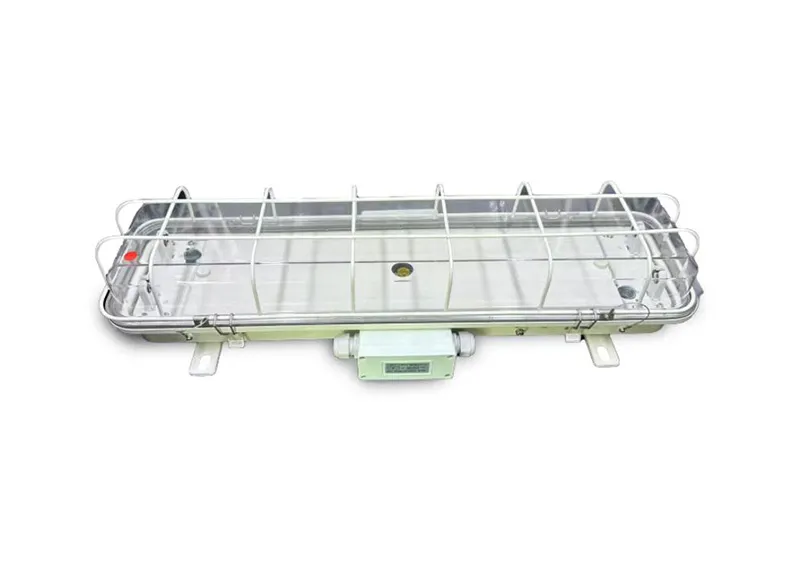
A marine fluorescent light is a luminaire built around a fluorescent lamp and designed for the vibration, humidity, salt exposure, and voltage conditions found on board a vessel. The distinction from a shore-side fluorescent fixture is not the lamp technology—a T8 or T5 fluorescent tube is the same component in both cases—but the housing, the sealing, the mounting, and the electrical interface that surround it.
Three characteristics separate a marine fixture from a general-purpose one. The first is ingress protection. A shipboard fixture in a machinery space or on an open deck must resist water spray, condensation, and in some areas direct washdown. The IP rating is not a marketing label; it describes the sealing of the lamp compartment and the cable entry, and it determines whether the fixture survives its first year of service. The second is vibration tolerance. A fluorescent lamp is a glass envelope with filaments and, in some types, a starter circuit; the fixture must hold the lamp securely and isolate it from the continuous low-frequency vibration transmitted through the ship’s structure. The third is voltage compatibility. Vessels operate on 24 V DC, 110 V AC, and 220 V AC systems, often in the same ship, and a fixture specified for the wrong supply will either fail to strike or fail prematurely.
The ZHIYUE marine fluorescent range illustrates how these characteristics are expressed in a product family. The fixtures are certified to CCS, DNV GL, and ABS, and are described as compliant with the SOLAS Convention and the IMO’s ship lighting guidelines. The family’s published performance envelope—luminous flux from 800 to 3,500 lumens, colour temperature from 3000 K to 6500 K, power from 10 W to 40 W, protection from IP65 to IP67 depending on model, and an operating temperature range of −20 °C to +50 °C—is broad because the family covers several different areas of the ship. The selection task is to narrow that envelope to the one or two models that fit a specific space.
The starting point for selection is the area, because the area determines the environment, and the environment determines the protection and housing requirements before any photometric consideration enters the decision.
Engine rooms and machinery spaces. This is the most demanding interior environment on most vessels. The space is hot, humid, and contaminated with oil mist and fuel residue. Condensation forms on cold surfaces when the machinery cools, and the fixture must tolerate repeated wetting and drying without allowing moisture into the lamp compartment or the terminal block. Oil mist settles on the diffuser and must be cleanable without attacking the housing material. Vibration is continuous and of low frequency, transmitted directly from the main engine and auxiliary machinery through the structural steel. A fixture for this space needs the highest IP rating in the family, a housing that resists oil and cleaning agents, and a mounting arrangement that keeps the lamp secure against vibration.
Crew cabins and accommodation spaces. The environment here is closer to a shore building than to a machinery space: the main challenges are humidity, occasional condensation, and the need for a light that is comfortable to live under rather than merely functional. Colour temperature and glare control matter more than maximum ingress protection. A bedside light in a cabin serves a different function from a ceiling light in the same cabin, and the fixture families reflect this—the range includes dedicated bedside units alongside pendant and ceiling fixtures. The cabin and accommodation application notes describe how the lighting brief for these spaces differs from the machinery-space brief.
Corridors, stairways, and escape routes. These are transitional spaces that combine the accommodation environment with a safety function. The fixture must provide even illumination along a corridor, must not create glare at eye level on a stairway, and must be robust enough to survive occasional impact from equipment or personnel moving through. Surface-mounted fixtures are common here because they do not intrude into the headroom of an already confined space.
Work areas, workshops, and stores. These spaces sit between the machinery and accommodation categories. They may be dusty, may be subject to occasional water ingress, and are often used intermittently, which means the fixture may sit idle for long periods and then be switched on in a cold or damp condition. The ability to strike reliably at low temperature is a selection criterion here, as is the ability to provide adequate light at workbench height rather than merely at ceiling level.
One boundary must be stated clearly at this point. Ordinary marine fluorescent lights are not explosion-proof fixtures. A fluorescent fixture in the general marine range is designed for the environmental conditions described above, but it is not designed or certified to contain an internal ignition or to prevent flame propagation in a hazardous zone. Where the area is classified as a hazardous zone—for example, a pump room on a tanker, or a space adjacent to a fuel handling system—the correct product is a certified explosion-proof luminaire, which is a separate product family with its own certification regime. The explosion-proof lighting range is the appropriate reference for those spaces, and a general-purpose fluorescent fixture should never be substituted into a hazardous-area specification on the basis that it is “marine grade.”
The product family breaks down into mounting types, and the mounting type is the second decision after the area.
Pendant lights. A pendant fixture is suspended from the deckhead by a chain, rod, or cable, placing the light source below the ceiling structure. This is the traditional arrangement in engine rooms and other tall machinery spaces, where the deckhead is high and the working plane is well below it. The pendant brings the light closer to the working area, improving the useful illuminance at bench or floor level without increasing the lamp wattage. It also moves the fixture away from the hot, congested deckhead structure. The trade-off is that a pendant fixture is more exposed to impact from moving equipment and is more difficult to service, because the maintenance technician must reach a suspended fixture rather than a flush-mounted one. The pendant range in the ZHIYUE family includes models differentiated by lamp configuration and housing detail, and the pendant model pages set out the specific dimensions and lamp arrangements for each.
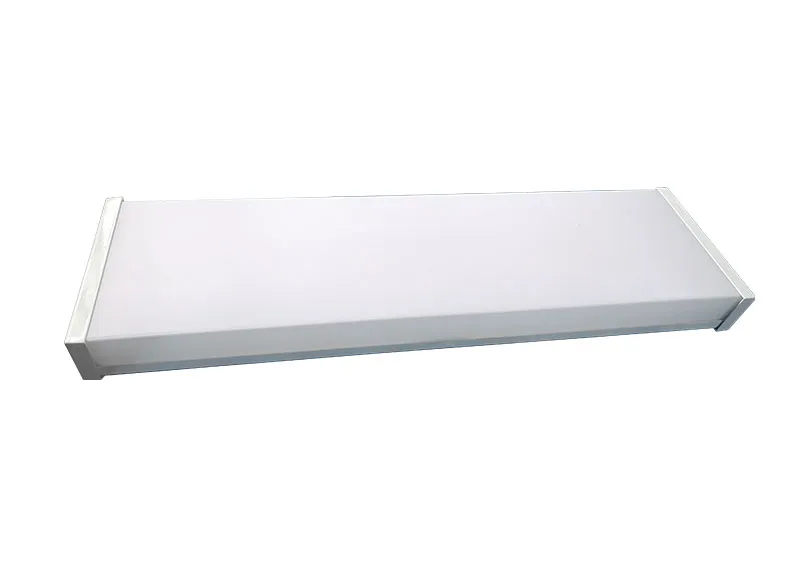
Surface-mounted (ceiling) fixtures. A surface-mounted fixture sits directly against the deckhead or bulkhead. This is the appropriate choice where headroom is limited, where the fixture must be protected from impact, or where the space is a corridor or cabin rather than a machinery space. The lower profile reduces the risk of damage and simplifies maintenance access, but the fixture is closer to the deckhead structure and therefore more exposed to conducted heat and to any condensation that forms on the structure itself. The surface-mounted range includes ceiling units with different diffuser profiles, and the ceiling model pages describe the specific arrangements.
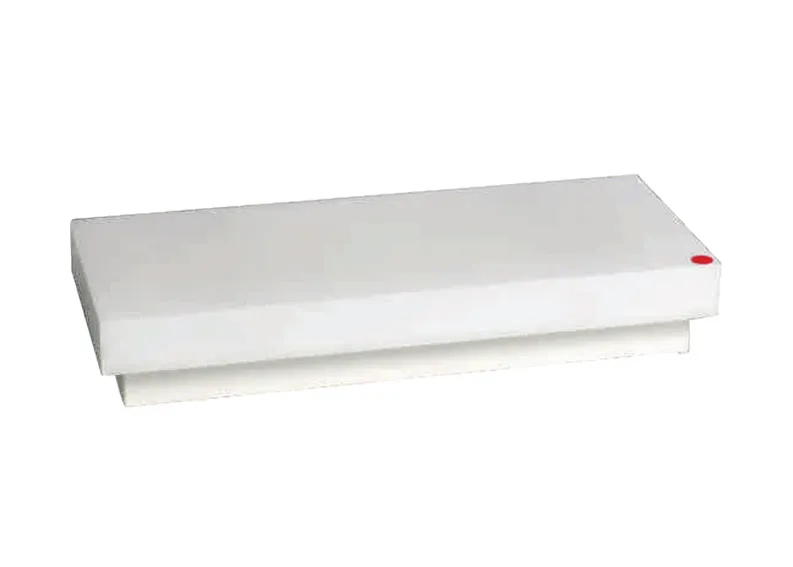
Corner and bulkhead fixtures. Some spaces are better served by a fixture that fits into a corner or mounts on a bulkhead rather than on the deckhead. A corner fixture can provide light along two walls simultaneously and can be positioned where a ceiling fixture would be obstructed by pipework or cable trays. The corner light model is an example of this arrangement.
Bedside and task lights. In cabins, the general ceiling light is supplemented by a local task light at the bunk or desk. These are smaller fixtures with a directional or shielded output, and they are selected for the user’s comfort rather than for area illuminance. The family includes dedicated bedside units with different mounting and switching arrangements.
The mounting-type decision is therefore not a matter of preference. It follows from the deckhead height, the presence of obstructions, the impact risk, and the maintenance access route in the specific space.
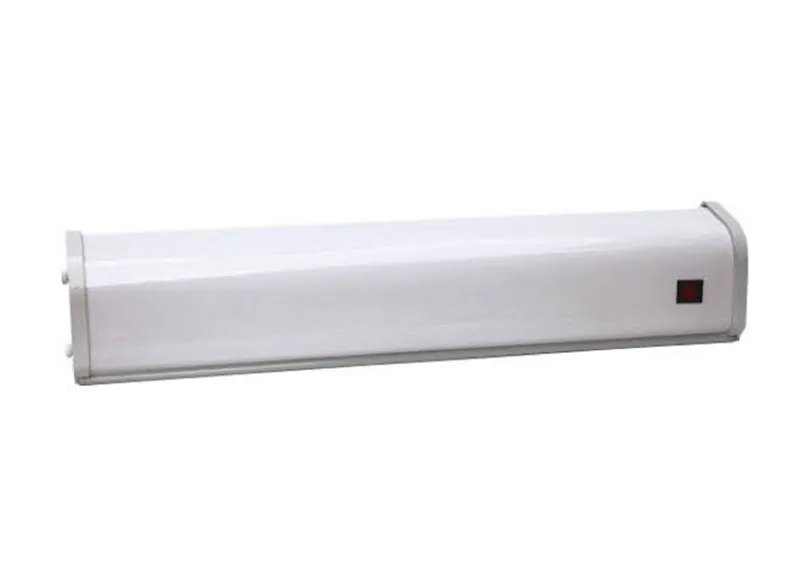
The comparison table below consolidates the area-by-area decision. It is a starting framework; the specific model within each row should be confirmed against the vessel’s lighting plan and the fixture’s published protection rating.
| Selection Factor | What Buyers Should Confirm | Engine room | Cabin / accommodation | Corridor / stairway | Work area / workshop |
|---|---|---|---|---|---|
| Mounting type | Pendant or surface-mounted, based on deckhead height and obstruction | Pendant (high deckhead) or surface-mounted where headroom is limited | Surface-mounted ceiling plus local bedside/task light | Surface-mounted, low profile | Surface-mounted or pendant depending on height |
| Supply voltage | Match the vessel’s distribution system at that location | Usually 220 V or 110 V AC; confirm at the distribution board | Often 220 V AC; bedside units may be 24 V DC | Match the local circuit | Confirm; workshops may have 110 V or 24 V tool circuits nearby |
| Housing material | Stainless steel, PC, or other specified material appropriate to the environment | Corrosion-resistant housing; oil-resistant diffuser | PC or painted steel; appearance matters | Robust housing resistant to impact | Dust- and water-resistant housing |
| Protection rating | Confirm the actual product IP rating, not a generic “waterproof” claim | Highest IP rating in the family (IP66–IP67 range) | IP65 range generally adequate | IP65 range | IP65 or higher depending on dust and water exposure |
| Maintenance | Lamp replacement and service accessibility from the available access route | Access from a ladder or platform; secure lamp retention | Easy access from cabin floor | Easy access without obstructing the corridor | Access without dismantling nearby equipment |
| Photometric target | Illuminance at the working plane, not just lamp lumens | High output, positioned close to the working area | Comfortable, low-glare, appropriate colour temperature | Even illumination along the corridor | Adequate task illuminance at bench height |
The table makes the central point of this section visible: the same family of fixtures can serve all four areas, but the model, the mounting type, and the protection rating differ in each column. A specification that names a single model for the whole ship has not made the area-by-area decision at all.
The voltage decision is the one most often left to the electrical contractor, and it is the one most likely to cause a late-stage problem if the fixture is ordered before the distribution arrangement is confirmed.
Marine fluorescent fixtures are commonly available in 24 V, 110 V, and 220 V versions, and the correct choice is determined by the circuit that serves the location, not by a general preference. A 220 V fixture installed on a 110 V circuit will not strike; a 110 V fixture on a 220 V circuit will be damaged. In a mixed-voltage vessel, the same physical space may contain circuits at different voltages—a cabin ceiling light on the 220 V lighting circuit and a bedside reading light on a 24 V emergency or battery-backed circuit, for example—so the voltage must be confirmed per location rather than per ship.
Two further electrical considerations matter at the selection stage. The first is frequency. A vessel may operate at 50 Hz or 60 Hz depending on its trade and its generating plant, and a fluorescent fixture with a magnetic ballast is frequency-sensitive. An electronic ballast is generally more tolerant, but the fixture’s published specification should be checked against the actual supply frequency rather than assumed. The second is emergency supply. Where a fixture is on an emergency circuit, it must be compatible with the emergency supply’s voltage and waveform, and the lamp must strike reliably when the emergency source is the only source available—which may be at a lower voltage or after a longer interruption than the normal supply.
The practical recommendation is to record the voltage and frequency for each lighting circuit on the lighting plan before the fixture schedule is finalised. A fixture schedule that lists the model and the quantity but not the supply voltage per location is incomplete, and the error will surface when the fixtures arrive on board and the electrician discovers that the cabin light and the engine room light are on different systems.
The protection rating and the housing material are the two specification items that determine how long the fixture lasts in its chosen location, and they are the two items most often reduced to a single word on a datasheet.
IP rating. The Ingress Protection code describes protection against solid objects and water. For shipboard interior lighting, IP65 is the general baseline for spaces exposed to dust and water spray; IP66 and IP67 indicate progressively higher resistance to water jets and temporary immersion. The important qualification is that the rating applies to the complete installed fixture, including the cable gland and any breather or drain. A fixture rated IP66 with an unsealed gland is not an IP66 installation. The ZHIYUE family publishes a range of IP65 to IP67 depending on model, and the model-level page states the rating for that specific unit; the buyer should match the rating to the space rather than selecting the highest number in the range by default, because a higher rating often comes with a heavier housing and a different maintenance routine.
Housing material. The common materials in marine fluorescent fixtures are stainless steel, painted steel, and polycarbonate (PC). Stainless steel offers the highest corrosion resistance and is appropriate for the most exposed locations and for spaces where cleaning agents are aggressive, but it is heavier and more expensive. Painted steel is lighter and less costly, and is adequate where the coating is intact and the environment is not severely corrosive; the risk is coating damage at the mounting points and subsequent corrosion at the damaged area. Polycarbonate is lightweight, resistant to impact, and non-corroding, and is widely used for diffusers and for complete housings in accommodation areas; its limitation is that it can be attacked by some solvents and can yellow under prolonged UV exposure, which is relevant for fixtures near open decks or in spaces with strong sunlight exposure.
Operating temperature. The published operating range of −20 °C to +50 °C for the ZHIYUE family covers most shipboard interior conditions, but the buyer should check the extremes against the specific space. A fixture in a machinery space may see local temperatures above the general space temperature, particularly near exhaust runs or boiler casings, and a fixture in a cold store or on a deck in a cold climate may see temperatures below the general range. The lamp’s ability to strike at the low end of the range is a separate question from the fixture’s ability to survive it, and both should be confirmed if the location is at an extreme.
A fixture that is difficult to maintain is a fixture that is maintained less often, and a fluorescent fixture with a dirty diffuser or a lamp at the end of its life delivers less light than its specification promises. The maintenance arrangement is therefore part of the selection decision, not an afterthought at commissioning.
Access route. The first question is how the maintenance technician reaches the fixture. A pendant fixture in a tall engine room may require a ladder, a mobile platform, or a permanently installed access catwalk. A surface-mounted corridor fixture may be reachable from the deck. The access route determines the labour cost of every lamp replacement and every cleaning cycle, and it should be recorded in the selection file alongside the fixture model.
Lamp replacement. Fluorescent lamps have a finite life, and the fixture should allow the lamp to be replaced without disturbing the sealing of the lamp compartment or the alignment of the diffuser. The lamp retention arrangement—how the tube is held in its lampholders—should be secure enough to resist vibration but accessible enough to release without special tools. This is a point where the fixture design matters more than the lamp specification: a secure lampholder that is difficult to release will slow every replacement, while a loose one will allow the tube to migrate or fail under vibration.
Cleaning. The diffuser and housing will accumulate dust, oil mist, or salt film depending on the location, and the cleaning method must be compatible with the materials. A polycarbonate diffuser cleaned with an aggressive solvent may cloud or craze; a painted steel housing cleaned with an abrasive may lose its coating. The maintenance procedure should specify the cleaning agent and the method for each fixture type, and the fixture selection should confirm that the materials are compatible with the cleaning regime the vessel actually uses.
Spares and standardisation. A fleet that uses the same fixture family across multiple vessels benefits from a single spares inventory and a single maintenance procedure. The trade-off is that a family selected for the most demanding space may be over-specified for the accommodation areas; the solution is usually to standardise on a small number of models within the family—one for machinery spaces, one for accommodation and corridors, and one for bedside or task lighting—rather than on a single model for everything. The bulbs and lamp range and the accessories range support this approach by allowing a common lamp type and common mounting accessories to be carried across the fleet.
The ZHIYUE marine fluorescent range is organised into series that reflect the mounting type and the intended space, and understanding the series structure is the bridge between the area-by-area decision and a specific model number.
The JCY series is the pendant family. These are the fixtures intended for engine rooms and other tall machinery spaces, where the light source is suspended below the deckhead to bring it closer to the working plane. Within the series, models are differentiated by lamp configuration and housing detail—the JCY22-2EF and JCY23-2EF are two pendant variants with different arrangements, and their individual pages set out the lamp type, dimensions, and mounting details for each. The series is also represented in the surface-mounted and corner configurations through related model families, so the “JCY” designation should be read as a starting point for the pendant application rather than as a complete description of every fixture in that mounting category.
The JJY series designation is used in the published product metadata alongside JCY for the marine fluorescent family, and the two are best understood as complementary designations within the same overall range rather than as separate product lines with different performance envelopes. For a buyer, the practical consequence is that the series name alone does not determine the selection; the model-level page, with its stated lamp configuration, protection rating, and mounting arrangement, is the document that should be matched against the space.
The model-level pages are the appropriate place to confirm the details that this guide can only describe in general terms. The pendant light model pages, the ceiling light model pages, and the bedside light model pages each set out the specific configuration for that unit. The selection task is to match the space to the mounting type, then the mounting type to the series, then the series to the model whose published protection rating and lamp configuration fit the environment.
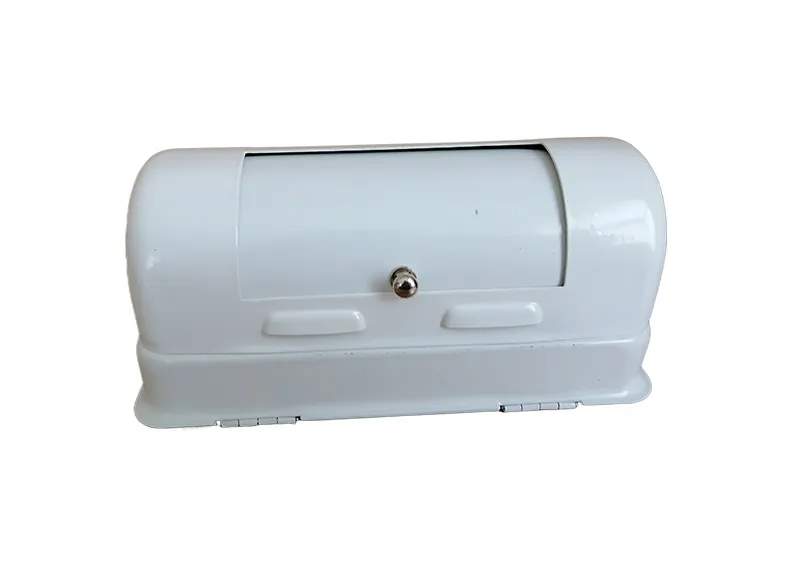
The question of fluorescent versus LED is now a routine part of any lighting specification, and the honest answer is that neither technology is universally superior. The choice depends on the space, the maintenance regime, and the vessel’s operating pattern.
Where fluorescent remains appropriate. Fluorescent technology is mature, widely supported, and familiar to ships’ crews and to the ship chandlers who supply them. Lamps are available through the established marine supply chain, and a crew that has maintained fluorescent fixtures for years can service them without new training. The initial fixture cost is generally lower than an equivalent LED luminaire, which matters for a vessel with a limited lighting budget or for a space where the lighting is not critical and the fixture is unlikely to be replaced before the vessel’s next special survey. In spaces where the fixture is easily accessible and the lamp replacement is a routine task, the maintenance advantage of LED is smaller.
Where LED has the advantage. LED luminaires typically have a longer service life than fluorescent lamps and do not suffer the same lumen depreciation curve, which reduces the maintenance labour over the vessel’s life. In spaces where access is difficult—high deckheads, confined machinery spaces, areas that require a permit or a shutdown to enter—the reduced replacement frequency can outweigh the higher initial cost. LED fixtures are also generally more tolerant of frequent switching, which matters in spaces that are occupied intermittently.
The selection implication. The technology decision should follow the area decision, not precede it. A machinery space with difficult access and a long maintenance interval is a candidate for LED on maintenance grounds; a corridor with easy access and a well-established fluorescent spares chain may be adequately served by fluorescent. The important point is that the comparison should be made on total cost of ownership over the maintenance interval, including the labour cost of access and the spares holding, rather than on the fixture price alone.
What is the difference between a pendant and a surface-mounted marine fluorescent light?
A pendant fixture is suspended below the deckhead, which is appropriate for tall machinery spaces where the light needs to be closer to the working plane. A surface-mounted fixture sits against the deckhead or bulkhead, which is appropriate for corridors and cabins where headroom is limited and impact protection matters.
Can a standard marine fluorescent light be used in a hazardous area?
No. A general-purpose marine fluorescent fixture is not certified for hazardous zones. Hazardous areas require a certified explosion-proof luminaire from the dedicated explosion-proof range, which has its own certification and construction requirements.
Which voltage should I specify for a marine fluorescent light?
The voltage must match the circuit serving the specific location, not a general ship-wide preference. Vessels commonly use 24 V, 110 V, and 220 V in different circuits, and the same space may contain more than one voltage. Confirm the voltage and frequency at the distribution board before finalising the fixture schedule.
What IP rating is needed for an engine room light?
Engine rooms are among the most demanding interior spaces, with humidity, oil mist, and condensation, so the highest available protection rating in the family is appropriate—typically in the IP66–IP67 range for this application. The rating must apply to the complete installation, including the cable entry.
How often do fluorescent lamps need to be replaced?
The published service life for the family is stated in hours, but the practical replacement interval depends on the operating hours, the ambient temperature, and the number of switching cycles. The maintenance plan should be based on the lamp’s published life and the vessel’s actual operating pattern, not on a fixed calendar interval.
Can I mix fluorescent and LED fixtures on the same vessel?
Yes, and many vessels do. The technology choice should be made per area on maintenance and total-cost grounds, and a mixed installation is common where fluorescent fixtures serve accessible spaces and LED serves difficult-access spaces.
What housing material is best for a cabin light versus an engine room light?
Corrosion resistance and cleanability drive the engine room choice, where stainless steel or a robust coated housing is appropriate. Appearance and weight drive the cabin choice, where polycarbonate or a painted housing is common. The material should be matched to the cleaning regime and the environment in each space.
Where can I find the specific model configurations for each mounting type?
The marine fluorescent light family page lists the models by mounting type, and each model-level page sets out the lamp configuration, protection rating, and mounting details for that unit.
The selection process described in this guide reduces to a short set of inputs: the area and its environment, the mounting type, the supply voltage and frequency, the required protection rating, and the maintenance access route. When those inputs are recorded per location, the fixture schedule becomes a straightforward matching exercise against the published model data, and the risk of a late-stage substitution or a rework at commissioning is largely removed.
The logical next step is to take the area-by-area schedule and compare it against the specific models in the family that meet each location’s requirements. The marine fluorescent light family page provides the series overview, and the model-level pages provide the configuration details for each mounting type. If the schedule needs a technical review before it is finalised—particularly for a newbuild or a fleet standardisation programme—the contact page is the appropriate route for putting the space-by-space requirements on record; it is a technical review, not a pricing request, and the useful inputs are the area list, the deckhead heights, the supply voltages, and any hazardous-area classifications.
Marine Navigation Lights: A Complete Selection Guide for Commercial Vessels
Marine Fluorescent Pendant Lights vs. Surface-Mounted Fixtures: Key Differences
How to Select Marine Lighting by Voltage, IP Rating and Installation Environment
Marine Lifebuoy Lights: Requirements, Types and Selection Guide
This article is part of ZHIYUE’s technical content library. No direct sales or pricing information is included. All technical discussions aim to help you make informed purchasing decisions.
GET A QUOTE