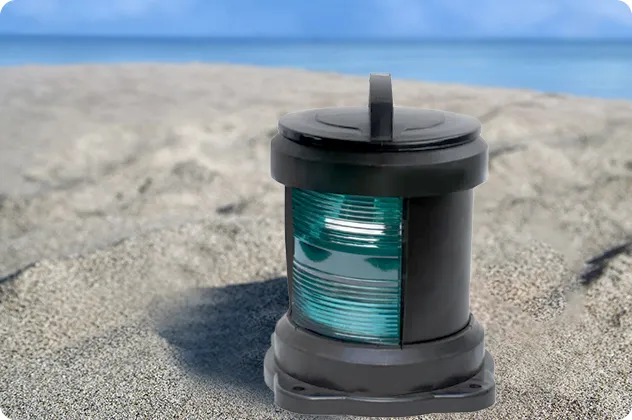
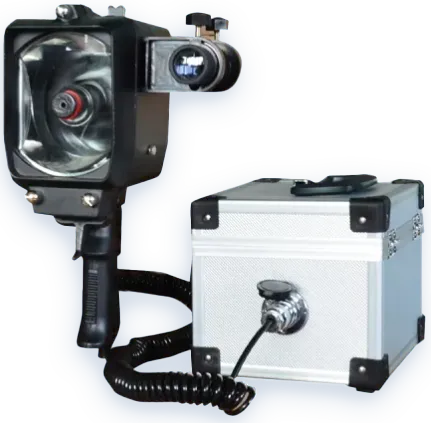
Article Overview: This guide helps procurement managers, sourcing teams, and project engineers evaluate marine incandescent pendant light selection for the CCD6-2 series. It translates operating needs into selection criteria, defines what to verify before ordering, and compares material and lamp-type trade-offs using the manufacturer-supplied product specification as the evidence boundary.
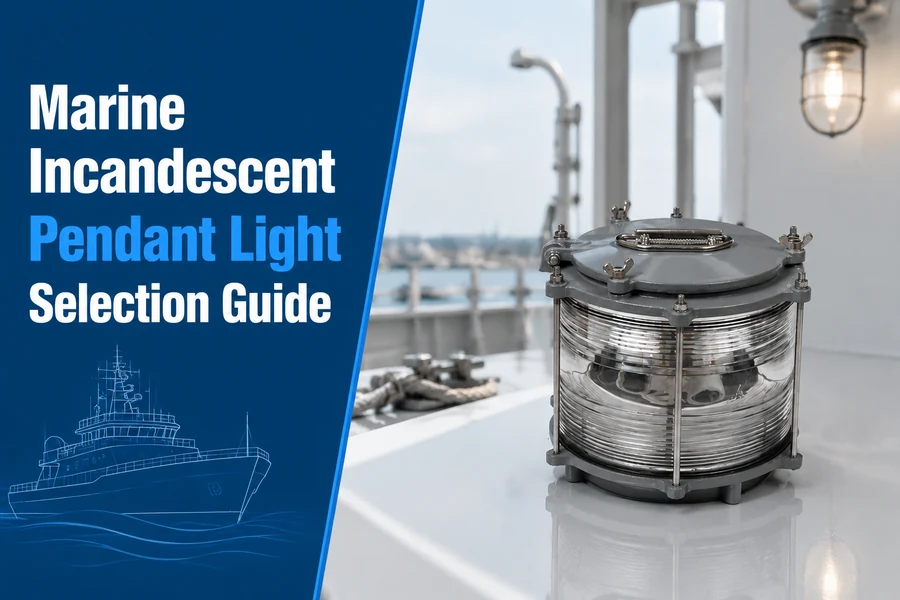
How Should Buyers Choose Marine Incandescent Pendant Light Selection?
Start with the installation environment first, then check protection, lampholder, voltage, and housing material. Wet deck use should always set the IP requirement before other features.
The starting point for a pendant light purchase is the physical and electrical context, not the appearance of the fixture. The manufacturer describes the CCD6-2 series as suitable for illumination in cabins and in wet locations such as decks and sidewalks in ships. The same catalog entry lists 220V supply, a 60W lamp, IP56 protection, an E27 lampholder, and housing options in plastic, aluminum, and brass. These are the fields that should appear in your equipment specification before you contact suppliers.
- Protection rating
- IP56 is listed in the product specification. Confirm that the intended mounting position is compatible with this rating and with the orientation of the lamp.
- Lampholder
- E27 is the stated fitting. Verify that your current bulb stock and replacement channels support E27.
- Supply voltage
- 220V is the listed value for this series. If your vessel uses 110V or 24V, the electrical match becomes a hard selection constraint.
- Housing material
- The series lists plastic, aluminum, and brass. The datasheet weights are 0.75 kg for the plastic CCD6-2, 1.05 kg for the aluminum CCD6-2, and 2.5 kg for the CCD9-5 brass unit.
Once these fields are confirmed, the next question is whether the selected product also fits the installation method. The CCD6-2 is a pendant-style fixture, so mounting height, cable entry, and access for bulb replacement need to be reviewed by the project engineer before the order is placed.
Apply these four criteria consistently to every candidate product. For example, a light destined for an open deck should be evaluated first on protection and housing material, while a cabin unit can reasonably be evaluated on lamp fitting and visual compatibility. To see the complete specification table, review the Marine Incandescent Pendant Light CCD6-2 Plastic product page.
What Should Buyers Verify Before Ordering Marine Incandescent Pendant Light Selection?
Before ordering, cross-check the product datasheet against your RFQ fields: voltage, lampholder, protection rating, material, weight, and glass color. Ask the supplier to confirm each line in writing, not only the model name.
Verification is the step where procurement mistakes are usually caught. Because the same CCD6-2 designation appears with different housing materials and weights, a quote that says only "CCD6-2" is incomplete. The buyer should request the current specification sheet, compare it field by field, and ask the supplier to confirm exactly which configuration is being quoted.
Step 1: Confirm supply voltage and lampholder
Validation: check the datasheet's 220V and E27 values against the ship's lighting circuit and replacement bulb inventory. Any mismatch makes the fixture nonconforming regardless of the IP rating.
Step 2: Verify protection rating and housing material
Validation: request the IP56 rating on the datasheet and confirm whether the quoted model is plastic, aluminum, or brass. Use the weights from the spec to validate the quote.
Step 3: Specify glass color and packaging
Validation: if red or green glass is required, state it in the purchase order. Confirm with the supplier that the selected material option supports that color.
Step 4: Define acceptance and inspection terms
Validation: agree on what evidence will accompany delivery and what the buyer may do if the delivered lamp does not match the datasheet.
Common sourcing risks at this stage are model ambiguity, voltage mismatch, and omitted glass color. Each risk should have a mitigation step in the evaluation sheet, such as requiring the supplier to write the material in the quote and attaching the datasheet to the order confirmation.
These checks are part of supplier evaluation, not a separate quality inspection. When several suppliers respond, use the same verification workflow for every quote so that the comparison is based on identical evidence.
Which Marine Incandescent Pendant Light Selection Trade-offs Matter Most?
The main trade-offs are material weight versus housing strength, colored glass versus simpler spare-part management, and incandescent versus fluorescent lamp technology. None is universally superior; the choice depends on the vessel's environment, electrical system, and maintenance capacity.
Trade-offs should be written into the evaluation matrix rather than resolved by preference. The CCD6-2 series is a useful example because it shows how the same basic model can have materially different weights. The plastic housing weighs 0.75 kg, the aluminum version weighs 1.05 kg, and the related brass fixtures weigh 1.9 kg or 2.5 kg. In a hypothetical installation where accidental impact is likely, a metal housing may be preferred, but the supplied specification does not quantify impact resistance, so buyers should request mechanical test data if impact exposure is a genuine requirement.
Plastic housing
Weight 0.75 kg; E27; 220V; IP56; transparent, red, and green glass options are listed. Plastic is the lightest starting point for cabin or wet-location lighting.
Aluminum housing
Weight 1.05 kg; same electrical specifications. The material is stated on the datasheet and should be confirmed before quoting because the model name is shared with the plastic version.
Brass housing
Weight 1.9 kg and 2.5 kg in the related CCD15-2 and CCD9-5 units. The higher weight implies stronger mounting requirements and possibly different freight cost.
Another trade-off is the light source itself. If incandescent is not mandatory for the project, the supplier also lists the Marine Fluorescent Pendant Light JPY28-2 and the Marine Fluorescent Pendant Light JCY22-2EF in a separate product family. Evaluate those options with the same protection, voltage, lampholder, and weight criteria before changing the light source.
How Should You Structure the RFQ for a Marine Incandescent Pendant Light?
Use an RFQ line item that specifies model, quantity, voltage, lampholder, protection rating, material, glass color, and acceptance criteria. Then score supplier responses against those same fields, not against presentation or brand.
The RFQ is the bridge between the decision criteria and the final purchase order. A structured request reduces the chance of receiving quotes for partial configurations. For the CCD6-2, an omission to watch for is the housing material, because the same model identifier covers plastic and aluminum versions.
- Require the supplier to state whether the quoted item is the plastic, aluminum, or brass version.
- Ask for a current datasheet and compare it field by field with your specification.
- Clarify minimum order quantity, lead time, and export packaging.
- Define inspection terms, including what documentation travels with the shipment.
- If red or green glass is required, write the color into the purchase order.
Use the same RFQ template for incandescent and alternative light sources so the evaluation stays objective. Procurement teams can then compare like-for-like acceptance data rather than product descriptions.
If possible, include the exact product page URL in the RFQ so the supplier knows which version is being described. This reduces ambiguity in the response and gives the procurement team a reference point for the final order.
FAQ
Can the CCD6-2 be ordered for 24V ship systems?
The supplied specification lists 220V for the CCD6-2 series, so a 24V application cannot be assumed compatible. Ask the supplier whether a 24V version exists or choose a different catalog item. Confirming this before RFQ avoids a voltage mismatch after delivery.
Is red or green glass suitable for navigation signaling?
The product description covers cabin and wet-location illumination, not navigation signaling. Colored glass may be offered for general indication, but a marine navigation light is a separate product category. If signaling is the purpose, review a dedicated navigation light product instead.
Which specification should always be verified before ordering?
A critical acceptance check is consistency between the quoted model, the datasheet, and the supplier's confirmation of voltage, lampholder, protection, material, and weight. For the CCD6-2, the same model name can appear with different housing weights, so written confirmation reduces the risk of nonconforming delivery.
Conclusion
Selecting a marine incandescent pendant light should follow the same discipline as any critical vessel component: define the operating environment, translate it into specification fields, and verify every field before the purchase order. The CCD6-2 evidence shows a 220V, IP56, E27 fixture with plastic, aluminum, and brass options, so material and weight should be explicit in the quote. By applying the same RFQ and evaluation sheet to every candidate, including fluorescent alternatives, buyers can reduce the risk of receiving a product that looks correct but does not match the vessel's conditions.