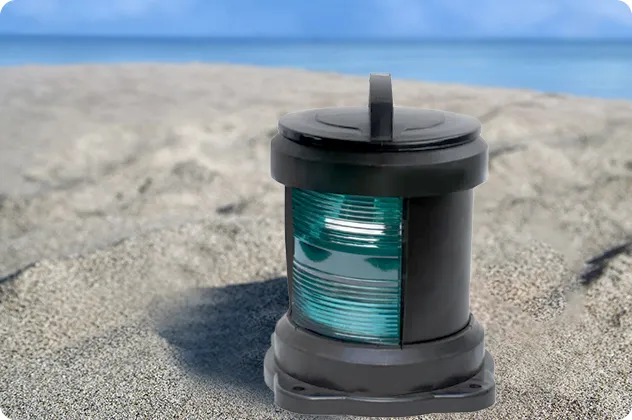
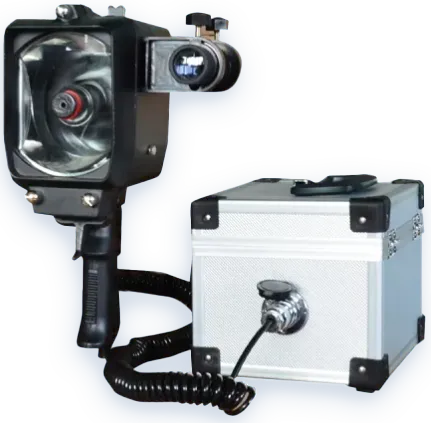
Article Overview: This guide explains marine portable light maintenance for the CSD7 handheld searchlight, written for ship engineers, electricians, and technical buyers. It answers how often to inspect the bulb, how to clean the plastic and glass safely, how to check the IP56 seal, and which failures to prevent. The direct conclusion is that scheduled visual checks and gentle cleaning prevent most ingress and corrosion issues. Recommendations are based on published CSD7 specifications and general marine lighting practice, not independent laboratory data.
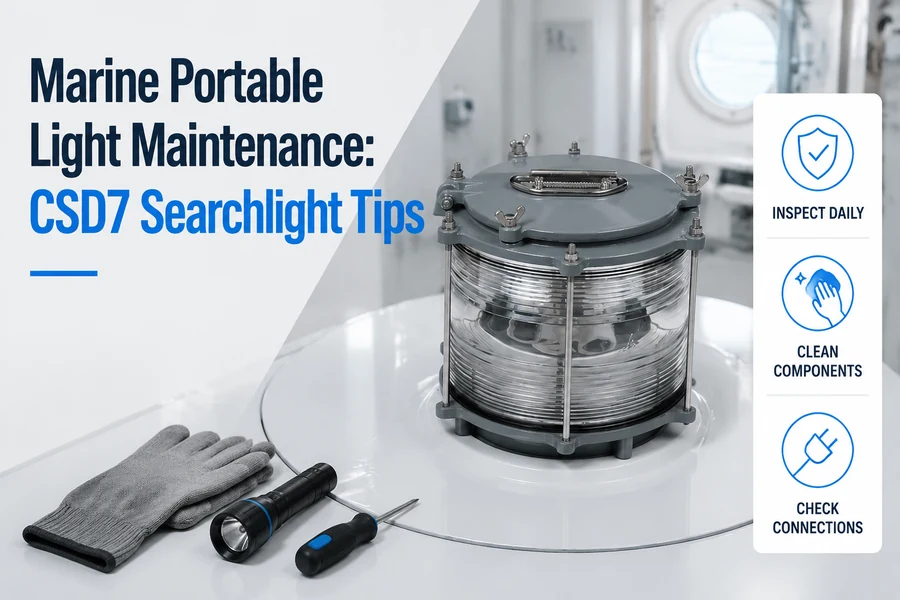
How Often Should You Replace the Bulb in a CSD7 Searchlight?
Replace the CSD7 bulb when the filament shows visible wear, the glass darkens, or the lamp fails; inspect it at every scheduled maintenance interval. Do not rely on a fixed hour count, because marine service conditions vary.
The CSD7 is specified with an E27 lampholder, 60 W rated power, and 220 V/24 V voltage options. Because it is a portable incandescent light intended for checking and repairing ships or loading and unloading cargo at temporary work places, the bulb is exposed to vibration, moisture, and temperature changes. A bulb that still emits light can already be weakened by cracked glass or a darkened envelope. Add a bulb check to your standard rounds whenever the searchlight is used in wet or dusty conditions.
Inspect the bulb and seating at every preventive maintenance interval defined in your shipboard planned maintenance system. Look for cracks, blackening, loose seating, and corrosion on the lampholder contacts. If the bulb is difficult to remove or the lampholder shows burn marks, investigate before replacing the bulb. Use only bulbs that match the CSD7 voltage and wattage specification; a higher wattage bulb can overheat the plastic shell.
| Component | What to check | Sign of wear | Action |
|---|---|---|---|
| Bulb and E27 lampholder | Filament, glass envelope, contact corrosion | Darkening, crack, flicker, burn marks | Replace bulb; clean contacts; verify voltage match |
| Glass lampshade | Cracks, chips, clouding | Visible fracture or diffuse light output | Replace lampshade; do not operate with broken glass |
| Protective net | Bent wires, broken welds, rust | Loosened net, exposed glass | Repair or replace; do not use without net protection |
| Rubber handle | Cuts, hardening, cracks | Poor grip, visible splitting | Replace handle or complete light assembly |
| Seal and mating surfaces | Dirt, salt residue, deformation | Water marks inside lens | Clean and test seal; do not force reassembly |
Before ordering a replacement, confirm the model variant against the published specification on the Handheld Marine Searchlight CSD7 product page, especially the voltage option and lampholder type.
Which Cleaning Methods Are Safe for the CSD7 Plastic Shell and Glass?
Clean the CSD7 plastic shell and glass with mild soap and water on a soft, damp cloth, then dry thoroughly. Avoid abrasive pads, solvents, and high-pressure washdown because they can scratch the shell and damage the seal.
The CSD7 product specification lists a phenolic plastics shell, glass lampshade, protective net, and rubber handle. Phenolic plastic is durable but can be scratched by abrasive cleaning tools. Salt deposits from marine air can accumulate on the shell and around the joint between the lamp body and glass lampshade. If left in place, these deposits can hold moisture against the seal and speed up corrosion of the lampholder contacts.
For routine cleaning, wipe the exterior with a cloth dampened in lukewarm water mixed with a few drops of mild soap. Avoid household degreasers, acetone, and other solvents unless the manufacturer confirms compatibility. Dry the entire unit with a clean, lint-free cloth before storage. Pay particular attention to the groove where the glass meets the shell, because water trapped there can be pulled into the IP56 seal during the next temperature cycle.
For fixed wet-area luminaires with a similar IP56 rating and E27 lampholder, the Marine Incandescent Pendant Light CCD6-2 Plastic should be cleaned with the same soap-and-water approach because its plastic housing and glass are equally sensitive to abrasive scrubbers.
How Do You Check the IP56 Seal on the CSD7 for Water Ingress?
Visually inspect the gasket and mating surfaces before each deployment, then test the seal by checking the lamp body is fully seated and the screw ring is tight. The CSD7 uses an IP56 water blowout prevention structure, so the joint line matters.
IP56 protection on the CSD7 is a design specification, not a maintenance guarantee. The protection depends on how well the glass lampshade seats against the shell and how fully the protective net and lamp body are secured. The product specification describes the unit as a water blowout prevention structure, which is a design measure to reduce water entering through the joint areas. A damaged gasket or a warped mating surface cannot be repaired by adding tape; replace the worn part instead.
- Gasket
- The compressible material between the glass and shell that keeps water out of the lampholder area.
- Mating surface
- The flat or stepped face on the shell that the gasket presses against; it must be clean, smooth, and free of dents.
- Water blowout prevention structure
- A design arrangement that limits water from being forced into the lamp housing by washdown or weather exposure.
Step 1: Disconnect and dry
Turn off the power and remove the plug or isolate the supply. Wipe the entire unit dry with a clean cloth.
Step 2: Inspect the joint area
Look for salt residue, sand, or cracks between the shell and glass. Remove any debris with a soft brush or dry cloth.
Step 3: Check the gasket condition
If a gasket is visible, press it gently to check for hardening, splitting, or flattening. Replace the gasket if it no longer springs back.
Step 4: Seat the lamp body
Confirm the bulb is fully inserted into the E27 lampholder and that the glass lampshade sits squarely on the shell.
Step 5: Secure the protective net
Tighten the net or screw ring evenly by hand until the assembly is firm. Overtightening can distort the mating surface and create a new leak path.
After reassembly, perform a wet test by directing a gentle stream of water over the joint from a safe distance while the light is unplugged, then open the unit and check for moisture. If water appears, separate the shells, inspect the gasket, and reevaluate seating. The Marine Portable Light CSD2, another portable unit in the same product family, follows a similar inspection logic even though its housing and sealing details differ.
What Marine Portable Light Maintenance Issues Affect the CSD7?
Common CSD7 failure points include a damaged protective net, loose lampholder connections, corrosion on the metal contacts, and a degraded rubber handle. Prevent them with regular visual inspections, correct bulb seating, and prompt replacement of worn parts.
The CSD7 is a handheld light that gets physically moved around decks, cargo holds, and temporary work places. That mobility creates failure modes that are less common on fixed marine lights. Most failures start with a small issue that is easy to find during a scheduled check: a bent wire on the protective net, a flicker when the cord is moved, or a cracked rubber handle.
- Symptom: Flickering or intermittent light
- Cause: Loose bulb in the E27 lampholder, or corroded contacts. Prevention: remove and reseat the bulb, clean contacts with a dry cloth, and verify the bulb base is not blackened.
- Symptom: Reduced light output
- Cause: Darkened or cloudy glass, or an aging bulb. Prevention: clean the glass and replace the bulb when the envelope shows visible discoloration.
- Symptom: Water marks inside the lens
- Cause: Damaged gasket or incorrectly seated glass lampshade. Prevention: inspect the gasket and mating surfaces before each deployment; do not operate with a visible gap.
- Symptom: Broken or bent protective net
- Cause: Impact during handling or storage. Prevention: store the light in a padded locker and replace the net before it exposes the glass to impact.
Corrosion is a particular concern in marine atmospheres. The metal lampholder contacts and the wire connections can develop oxidation even when the shell remains intact. When you inspect the bulb, also check the wiring where it enters the handle. If insulation is cracked or terminals are green, address the problem before the bulb fails completely. The CSD7 handle material is rubber, so inspect it for cuts and age hardening; a damaged handle makes the light unsafe to carry near electrical parts.
Prevention also means buying spare parts that match the original specification. A replacement bulb must be the correct wattage and voltage; a replacement lampshade must seat against the same gasket; and a replacement protective net must fit the same shell. Escalate to a qualified electrician if you find exposed wiring, recurring water ingress, or corrosion inside the lampholder; do not continue using a searchlight with a compromised seal. Store the CSD7 in a dry location, coil the cable loosely, and keep a written log of each inspection so deterioration becomes visible across service cycles.
FAQ
Can I use a 100 W bulb in my CSD7 searchlight?
No. The CSD7 is specified for 60 W power with an E27 lampholder and 220 V/24 V voltage options. Fitting a higher-wattage bulb raises the temperature inside the phenolic plastic shell and can damage the lampholder or gasket. If the original bulb size is not available, contact the supplier for a compatible replacement rather than changing the wattage.
What should I do if water gets inside the CSD7 lens?
Disconnect the light from the power source immediately and dry the unit thoroughly. Remove the glass lampshade carefully, wipe down the lampholder area, and inspect the gasket for damage. If the gasket is hardened, flattened, or split, replace it before testing again. Recurring moisture inside the lens means the seal is not effective and the light should not be used until repaired.
How can I tell if the protective net needs replacement?
Replace the protective net when any wire is bent enough to reduce clearance between the net and the glass, when a weld joint is broken, or when rust has weakened the mesh. A damaged net increases the risk that the glass lampshade will strike a hard surface during handling. During each inspection, lightly shake the unit and listen for rattling that indicates a loose net.
Conclusion: Keep the CSD7 Reliable With Scheduled Checks
Routine marine portable light maintenance for the CSD7 comes down to four habits: inspect the bulb and lampholder at scheduled intervals, clean the plastic shell and glass with mild soap and water, verify the IP56 seal before each deployment, and replace damaged protective parts early. Most failures are visible before they stop the light from working. When the seal or wiring is compromised, stop using the searchlight and escalate to a qualified electrician or the supplier. Following these practices keeps the CSD7 ready for temporary work-place illumination and reduces the risk of water ingress and corrosion over the light's service life.