Article Overview: This guide helps technical buyers and procurement teams compare Zhiyue Group marine lighting models for cabins, wet decks, and cargo holds. It evaluates portable searchlights, pendant lights, and cargo lights on published specifications, then gives conditional selection guidance based on documented product data rather than universal rankings.
Which Zhiyue Group Marine Lighting Options Should Buyers Compare?
Compare Zhiyue Group marine lighting models by application first: portable searchlights for temporary work, pendant lights for cabins and wet decks, and cargo lights for large holds. Then check protection rating, lampholder, wattage, and mounting on the specification sheet.
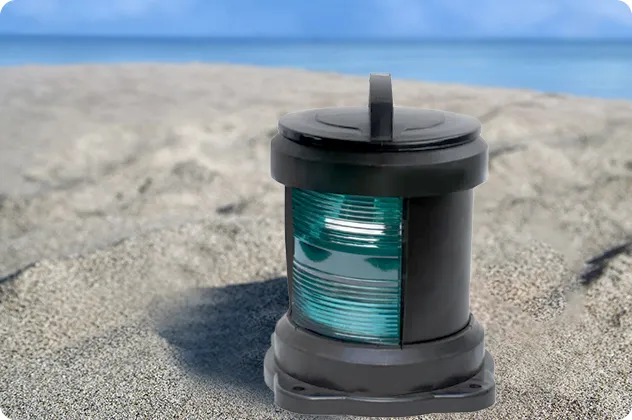
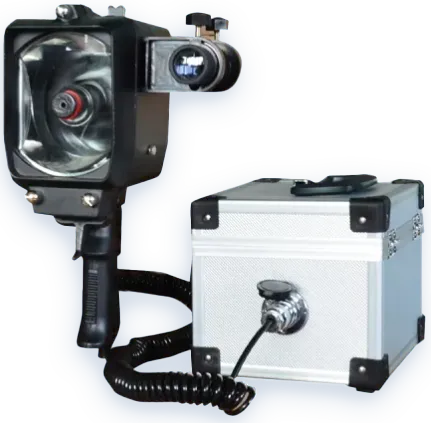
Zhiyue Group's published marine incandescent range includes three families with enough documented data for a meaningful comparison. The Handheld Marine Searchlight CSD7 is a portable, IP56-rated fixture with a rubber handle, glass shade, and protective net. It is intended for checking, repairing, and loading or unloading goods at temporary work places. The Marine Incandescent Pendant Light CCD6-2 Plastic is a fixed pendant unit for cabins and wet places such as decks and sidewalks. The Marine Cargo Light CGD2 is a movable steel fixture for cargo warehouse areas that need broad illumination.
The table below summarizes the published data for these three families. Use it as a starting point, then confirm the current model sheet before writing the RFQ because suppliers can update materials, voltage options, and weights.
| Product family | Typical use | Voltage | Power | Protection | Material | Lampholder |
|---|---|---|---|---|---|---|
| Handheld Marine Searchlight CSD7 | Temporary work, cargo handling, repair | 220V / 24V | 60W | IP56 | Plastic, glass shade, protective net | E27 |
| Marine Incandescent Pendant Light CCD6-2 Plastic | Cabins, decks, sidewalks, wet places | 220V | 60W | IP56 | Plastic (also available in aluminum and brass) | E27 |
| Marine Cargo Light CGD2 | Cargo warehouse, large-area movable illumination | 110V / 220V | 300W / 500W | IP20 | Steel | E40 |
Buyers should compare models across the same dimensions rather than mixing marketing descriptions. For each shortlisted fixture, record the voltage, rated power, IP rating, housing material, lampholder, mounting, and weight. This creates a line-item comparison that can be attached to the RFQ.
The published data also shows a variant issue: the CCD6-2 family includes plastic, aluminum, and brass versions, and those versions have different weights. For example, a buyer who specifies only the model name without a material suffix may receive a variant that does not match the intended mounting location. Add the material and model suffix to the RFQ line item.
If the project also requires decorative cabin lighting, Zhiyue Group lists an LED downlight model, but the three incandescent families above give a clear comparison on protection and mounting because their published data is more complete for wet and large-area applications.
What Are the Main Zhiyue Group Marine Lighting Trade-Offs?
The main trade-offs are protection versus output, portability versus coverage, and material weight versus fixture robustness. A higher IP rating suits wet locations but usually appears on lower-wattage fixtures; a lower IP cargo light delivers more light but must stay out of wet conditions.
Start with the protection rating because it is the first operational constraint. The CSD7 and CCD6-2 are both IP56, which means they are designed for environments where water spray can occur. The CGD2 is IP20, so it should be limited to dry areas such as cargo holds and should not be washed down while energized. For example, if a cargo hold is cleaned with high-pressure water, an IP20 fixture creates an avoidable electrical risk.
Wattage is the second trade-off. The CGD2 supports 300W or 500W lamps, so it fills a large area with a single fixture, but it also generates more heat and draws more power. The CSD7 and CCD6-2 are both 60W fixtures, which is enough for localized repair tasks or cabin illumination but not for open cargo holds. There is no free combination of high wattage and high water protection in the published lineup, so procurement should treat these as alternatives rather than upgrades.
Mounting and portability create the third trade-off. The CSD7 is handheld, has a plastic shell, and has a removable lamp body for convenient replacement. The CCD6-2 is a pendant fixture that needs a fixed wiring point. The CGD2 is described as movable but weighs 3.6 kg and needs an E40 lamp, so it is practical for repositioning inside a hold rather than carrying from space to space.
Another operational implication is spare parts. The CSD7 and CCD6-2 share an E27 lampholder, which simplifies bulb stock if a vessel uses both. The CGD2 requires E40, so the crew must carry a separate family of bulbs. This spare-part footprint matters for vessels that operate far from supply ports.
Decision note: Choose the protection rating first, then the wattage, then the mounting style. A fixture with the wrong IP rating cannot be fixed by adding a stronger lamp.
Which Zhiyue Group Marine Lighting Option Fits Each Operating Condition?
For temporary deck work, choose the CSD7 portable searchlight; for cabins and wet walkways, choose the CCD6-2 pendant light; for large cargo holds, choose the CGD2 cargo light. The decision depends on mounting, wet exposure, coverage area, and available voltage, not a universal winner.
The easiest way to apply the comparison is to work through a short selection sequence before touching the RFQ.
Phase 1: Define the area and environment
Identify whether the fixture will serve a cabin, a wet deck, a temporary work position, or a cargo hold. This decision sets the required IP rating.
Phase 2: Check the vessel power supply
Confirm whether the location runs 24V or 110/220V. The CSD7 can be specified in 220V or 24V, the CCD6-2 is listed at 220V, and the CGD2 is listed at 110V or 220V.
Phase 3: Match the lampholder to the bulb plan
CSD7 and CCD6-2 use E27; CGD2 uses E40. Verify your maintenance stock, because the lampholder determines which spare bulbs the crew must carry.
Phase 4: Shortlist by wattage and mounting
Use 60W fixtures for localized or low-ceiling areas and 300W/500W fixtures for large open bays. Confirm the mounting method: handheld, pendant, or movable fixed-position.
In practice, the CSD7 fits operations such as checking hull fittings, repairing machinery in a temporary location, or illuminating a loading spot on deck. Its IP56 rating and protective net make it more suitable for exterior work than the IP20 cargo light. The CCD6-2 fits cabins, passageways, and protected deck areas where a fixed pendant is acceptable. The CGD2 fits cargo holds and other large dry spaces where the fixture will be moved occasionally but does not face water spray.
Condition-based selection summary
- Temporary exterior work and loading: Handheld Marine Searchlight CSD7 (IP56, E27, 60W, portable).
- Cabins and wet walkways: Marine Incandescent Pendant Light CCD6-2 Plastic (IP56, E27, 60W, pendant).
- Large dry cargo areas: Marine Cargo Light CGD2 (IP20, E40, 300W/500W, movable).
These assignments are conditional. As a hypothetical example, consider a cargo hold that is washed down with seawater after every voyage: the CGD2's IP20 rating is not appropriate, and the purchasing team should either relocate the fixture or select a water-protected industrial light. Conversely, if the temporary deck work area has no nearby power point, the CSD7's voltage variant must be checked before it is included in the RFQ.
Before finalizing the shortlist, ask the supplier to confirm three details: the exact voltage variant, the IP rating of the complete assembled fixture, and the lampholder supplied with the unit. These details are common sources of acceptance mismatches in marine lighting procurement.
FAQ
Can the CSD7 searchlight be supplied for both 24V and 220V systems?
The published specification lists 220V and 24V for the model family, but you should confirm the exact delivery variant before ordering. Voltage is a selection parameter, not an automatic dual-voltage feature, so state the required voltage in the RFQ and verify it on the nameplate.
Why is the CGD2 cargo light rated IP20 while the pendant light is IP56?
The two fixtures are designed for different water exposure. The CCD6-2 pendant light is intended for cabins and wet places like decks and sidewalks, so it carries IP56. The CGD2 is intended for cargo warehouse areas that are normally dry, so its lower IP20 rating reflects that operating condition. For example, if a cargo hold is washed down regularly, ask the supplier for a higher-rated alternative.
Which lampholder sizes do these Zhiyue Group marine lighting models use?
The CSD7 and CCD6-2 use E27 lampholders, while the CGD2 uses E40. E27 and E40 are different lampholder sizes and are not interchangeable. Confirm the lampholder with the supplier so the correct spare bulbs are stocked before the vessel goes into service.
Conclusion: Match the Zhiyue Group Marine Lighting Model to the Operating Environment
No single Zhiyue Group marine lighting model fits every ship area. The CSD7 portable searchlight matches temporary work where water spray is possible; the CCD6-2 pendant light suits cabins and wet walkways with IP56 protection; and the CGD2 cargo light provides high-wattage illumination for large dry holds. Compare voltage, lampholder, protection rating, and mounting before writing the RFQ, and confirm the current specification sheet with the supplier.